Sunday, July 29, 2012

50 Sleeves Of Great: The 50 Essential Rock Discs.

With the album hanging by its fingernails on the edge of a cliff while the digital download stomps all over it, now seemed as good of a time as any to compile a list of the rock canon, in 50 discs' worth of music.  These aren't necessarily my favorite discs as they are an attempt to reach "the" essential discs, whatever that means.

The task was to strike a balance between the artist & the album; thus, I compiled most of the lists in sets of 5—if I get only 5 more discs, what would they be?—& continued until I got up to 50.  In this regard, it was a bit like a "desert island" list, with each new set allowing it to grow outwards one more layer.

Overall, it's definitely slanted towards the older (none of this music was issued after 1991 & none of these albums were released after 1994), but that only seemed appropriate—if this the canon where everything came from, it would be counterintuitive to also expect the list to be contemporary.  To this end, I stuck with the "most classic" editions of the albums, including modern substitutes if it has gone out of print.

Finally, for the reviews, I stuck within a 140-character "tweet-size" review/statement/headline to get a one-sentence gist of what it was doing here.  When it came down between an album & an artist, I usually went with bigger artist as opposed to the "better" album.

So here's the list in rough "essential" order, from most essential to least, The 50 Essential Rock Discs, "50 Sleeves Of Great."


1.     The Beatles: 20 Greatest Hits [US]. A history – of the Beatles, of the 1960s, of modern rock & roll – in 20 number-one American hits.
[OOP: Substitute The Beatles: 1.]


2.     The Beatles: Rubber Soul. The Beatles’ first masterpiece, taking in Dylan & drugs for a deeper, folkier, & more introspective sound.


3.     The Beatles: Revolver. As the artistic ambitions grow, so does the quality & richness of the music—song-for-song, their finest album.


4.     The Beatles: Sgt. Pepper. The “Greatest Album of All Time”—at least in terms of influence—proving that rock could be Art.


5.  The Beatles: Abbey Road. A fitting finale of the greatest band of all-time—with production & musicianship, they went out on top.


6.     Elvis Presley: The Sun Sessions. The Big Bang of rock & roll, built around 10 perfect singles—blues on one side & country on the other.
[OOP: Substitute Elvis Presley: At Sun.]


7.    Elvis Presley: Golden Records. Rock’s premier icon defines the music on “Heartbreak Hotel,” “Hound Dog,” “Don’t Be Cruel,” & lots more.


8.     Bob Dylan: Bringing It All Back Home. Dylan plugs in—on record, anyway—& brings lyricism to rock—brash, surreal, & utterly indispensible.


9.     Bob Dylan: Highway 61 Revisited. From the gunshot opening of “Like a Rolling Stone” through the end of “Desolation Row,” his masterpiece.


10.  Bob Dylan: Blonde on Blonde. The poet-king hooks up with Nashville’s finest session men & spins surreal songs of love, drugs, & wine.


11.  Bob Dylan: Blood on the Tracks. Half-electric, half-acoustic, & with “Tangled Up in Blue,” all gold—his finest album since the ’60s.


12.  The Rolling Stones: Big Hits. With “Satisfaction,” “Get Off of My Cloud,” & “It’s All Over Now,” the hardest rock of its time.


13.  The Rolling Stones: Beggars Banquet. They master their own voice on “Sympathy for the Devil,” then dig deep into their folk roots.


14.  The Rolling Stones: Let It Bleed. With “Gimme Shelter” & the rest, the music that made them the Greatest Rock & Roll Band in the World.


15.  The Rolling Stones: Exile on Main St. Their masterpiece—a mix of rock & rhythm, blues & country, pain & irony, mud & swagger.


16.  Chuck Berry: The Great Twenty-Eight. With “Maybellene,” “Rock & Roll Music,” & “Johnny B. Goode,” the rock upon which rock & roll rests.
[OOP: Substitute Chuck Berry: The Definitive Collection.]

17.  James Brown: 20 All-Time Greatest Hits. A history of modern black music by the man who pushed it the hardest & drove it the furthest.
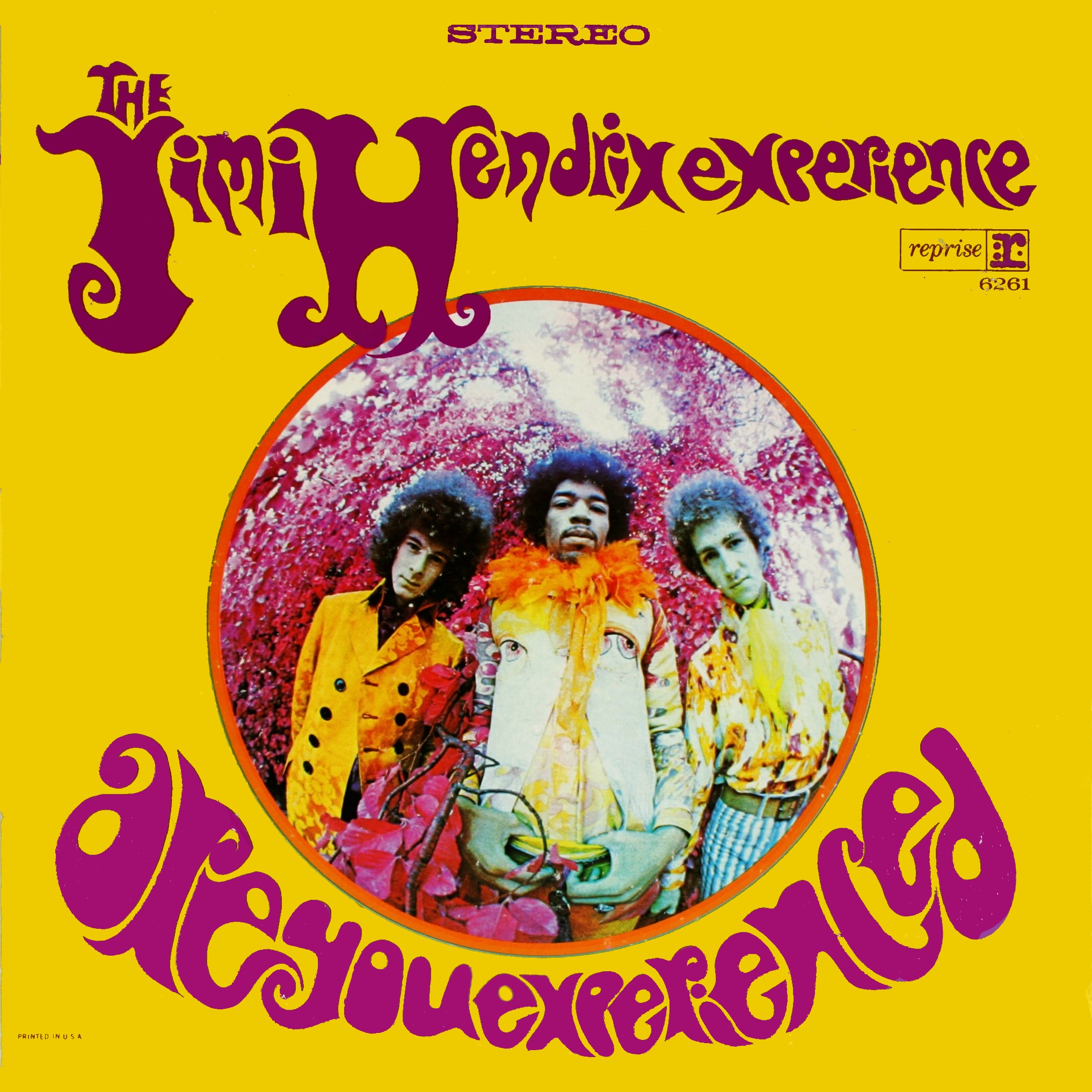

18.  Jimi Hendrix: Are You Experienced? Rock’s best musician delivers the music’s finest debut—an acid blast of sex, drugs, & “Purple Haze.”


19.  Aretha Franklin: I Never Loved a Man… The Queen of Soul pushes the sacred into the secular, & on “Respect,” love into politics.


20.  Ray Charles: The Very Best of the Atlantic Years. With “I’ve Got a Woman” & “What’d I Say,” the rock of ages that created soul music.


21.  Beach Boys: Pet Sounds. A tale of love found & lost, told through rich harmonies & dense instruments—& the finest music up to its time.


22.  Jerry Lee Lewis: 18 Original Sun Greatest Hits. With “Great Balls of Fire” & “Whole Lotta Shakin’ Goin’ On,” rock’s wildest goes mad.


23.  Little Richard: Here’s Little Richard. From “Tutti-Frutti” to “Long Tall Sally,” the “ooooo” that launched a thousand bands.


24.  Michael Jackson: Thriller. For one brief, shining moment, rock, pop, & R&B all converged—& in songs like “Billie Jean,” it was Good.


25.  Led Zeppelin: Untitled [IV]. The “first” heavy metal band’s finest hour, with the epic “Stairway to Heaven” & “When the Levee Breaks.”


26.  Buddy Holly: The “Chirping” Crickets. With “That’ll Be the Day,” a rare hallmark album from the ’50s from one of rock’s key founders.


27.  Bob Marley: Legend. Reggae’s master summed up on the genre’s best-selling album ever. I’d say you should own it, but you already do.


28.  Stevie Wonder: Innervisions. The ’70s most-celebrated star survives a car crash, becomes a one-man-band, & makes the music of his life.


29.  Nirvana: Nevermind. After two failed attempts—one US, one UK—punk finally broke. Out of Seattle, of all places.


30.  Sam Cooke: The Best Of. Effortlessly mixing rock, pop, & R&B in hits like “You Send Me,” they called it soul, & for good reason.


31.  The Velvet Underground & Nico. Punk, alternative, indie—it all starts here. The rare album (& band) that literally changed everything.


32.  Marvin Gaye: What’s Going On. Motown’s slickest star grows weary & scruffy, looks inward, & crafts his—& soul music’s—masterpiece.


33.  The Who: Who’s Next. The ’60s mods become ’70s rockers through their fiercest anthems: “Baba O’Riley” & “Won’t Get Fooled Again.”


34.  Otis Redding: Otis Blue. Sung like blues, marketed like soul, & backed by funk, this was music that dug so deep, it felt bottomless.


35.  Madonna: The Immaculate Collection. ’Tis a party, she’s a whore—until “Like a Prayer,” in which the artist suddenly lives up to her name.

36.  The Sex Pistols: Never Mind the Bollocks. The anti-leaders of the aborted 3rd wave of rock—an implosion of anarchy, nihilism, & fury.

37.  Bruce Springsteen: Born to Run. Rock’s biggest fan goes for the music’s biggest statement &—in songs like the title track—gets it.


38.  The Ramones. 14 songs in 30 minutes. No solos, no bullshit. As their singer once said, it was “bubblegum music for sick kids.” 1-2-3-4!


39.  The Doors. Lodged behind Sgt. Pepper during the Summer of Love, the dark, brooding (& more timeless) underbelly of rock’s diamond sky.


40.  The Clash: London Calling. After the apocalyptic title track, the band surveys rock, pop, & reggae, remaking it into its own punk image.


41.  Prince: Purple Rain. The Purple One at the peak of his talent & popularity, turning funk into confession & sex into love.


42.  U2: The Joshua Tree. Outside is America—or, the album that made them the biggest band in the world, which they have been ever since.


43.  Public Enemy: It Takes a Nation of Millions… The Sgt. Pepper of hip-hop—i.e., if not the actual, then the “official” greatest rap album.
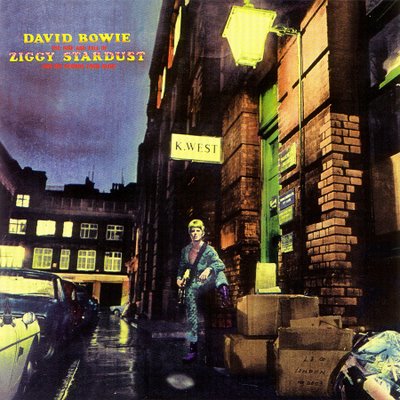


44.  David Bowie: Ziggy Stardust. A passion play about an alien who saves the earth, & the breakout of the even stranger star who created it.


45.  Janis Joplin: Greatest Hits. Rock’s greatest white female vocalist—dressed like a hippie, but all blues down to her tortured soul.


46.  Simon & Garfunkel: Bridge Over Troubled Water. The calm in the storm of ’60s rock at the end of the decade & fracturing—beautifully.


47.  Sly & The Family Stone: Greatest Hits. Archetypal funk as psychedelic rock as American utopianism. “I Wanna Take You Higher,” indeed.


48.  Neil Young: After the Gold Rush. The ’70s iconoclast at his finest—wistful (title track), fierce (“Southern Man”), & uncompromised.


49.  Van Morrison: Astral Weeks. Ignored then, revered today, a journey into the mystic by the most mystical performer of them all.


50.  The Byrds: Greatest Hits. With “Mr. Tambourine Man” & “8 Miles High,” a perfect summation of the band from folk-rock through space-rock.

Saturday, July 14, 2012

Woody Guthrie at 100.

I knew I loved Woody Guthrie before I even heard him.

That was because of the idea of Woody Guthrie — an irresistibly simple tale, brought forth to the public imagination by the young Bob Dylan — Woody Guthrie was this guy who rambled around America during the Great Depression Dust Bowl & wrote beautiful, piercing songs that captured what life was like.  Dylan once famously said that if you listened to his records, you could learn how to live.  Yeah, it was kind of like that.

The truth, of course, is more complicated & uglier in a way — when I finally did hear Woody Guthrie, he didn't have the nestled-in gravel of Dylan, but rather a sharp, nasal sound that rolled over his dust-dry melodies & hammer-on-filled guitar picking.  It didn't sound sweeping or epic, but more like a wiry little guy who someone asked to stand in a room & run through some songs.  But maybe that was the point all along.

When I finally got myself an education in Guthrie-ism by reading Joe Klein's remarkable Woody Guthrie: A Life from 1981, it turns out that the backstory is closer to the stark sound of what I first heard, as opposed to the dream I had first thought.  Klein makes no bones about it — he says in his introduction that, until he wrote this book, he had the image of Woody Guthrie as a hobo with a guitar, heading off to see what was around the next corner & singing "This Land Is Your Land."  He made Guthrie sound like Johnny Appleseed, a myth to tell the kiddies.  The reality, he wrote, was often at odds to this idea, & a whole lot more complicated.

When Woody Guthrie hit the road in the 1930s, he was married with children.  He would just sort of up & leave them with little-to-no warning, & when he would return home, he would pace the floor restlessly.  The book taught me that he didn't spend the entire time on one big romantic, aimless trip — a hobo's On the Road — but just took a ton of little trips, circling from his native Oklahoma, up around the Dust Bowl & out West, & then back home for a few weeks or days or minutes.  & then he was off again.  It was less like a hungry search than it was an obsessive restlessness.

But the disconnect between how we think of Guthrie & what he actually did was first bridged by none other than Guthrie himself.  Just read his autobiography, Bound for Glory, & you'll instantly understand how quickly the romanticism can overpower the reality.  From the hobos singing "This train is bound for glory" on the first page, it strikes perfect poses between fact & fiction, history & remembrance.

For everything that Guthrie was or wasn't, he had a shrewd understanding of America, & what it meant.  The land was big, & it was ours, & the only thing that could be done was to live in it — go to the Dakotas, travel to California, see the lazy Rio Grande.  The fact that he did so in a time in which the land was at its worst — the Dust Bowl — only makes his plight that much more fascinating — &, perhaps, modern.  Struggling with this wide-eyed wonder is people starving & black dust storms that felt like nothing less than an apocalypse. My favorite Woody Guthrie song is "The Great Dust Storm," in which he covers a single day — April 14, 1935 — & cuts all around the country to document its fallout.  But for all of the wonderful little lines about here & there — "In old Dodge City, Kansas, the wind it blew so strong/They thought that they could hold out but they didn't know how long" — the best lines are focused on a much tighter scene:

& the families they were huddled
Into their oil boom-shacks
& the children then was crying
As it whistled through the cracks.

Who wrote songs where wind storms whistle through the cracks of clapboard poverty shacks?  In 1935, no less?!  It was as though the great American persona — blunt, dry, & deadpan — had found its way to a guy with the observational skills of a Dante & the scope of a Joyce.  In these four lines, you can all but unlock Bob Dylan's first three albums.

Of course, for all of the stuff I've seen about the Guthrie centennial, I've seen no mention of "The Great Dust Storm."  Everyone opts instead for "This Land Is Your Land," which makes sense; even Woody would tell you that the best thing a writer can do is hook their reader in right away.  Everyone knows the song, even if they don't really know it, the wheat fields waving, the diamond deserts.  &, as you've probably already read about half a dozen times, that song was a protest song written in disgust against "God Bless America," & given the most unforgotten "forgotten" verse in American song: A lovely final one in which a private property sign says nothing on its other side — & that side was made for you & me — that guaranteed it would never be included in anything other than Joe McCarthy's playlist.

But for me, "The Great Dust Storm" is the one that brings it all together.  In it, you get Guthrie the poet & Guthrie the reporter, as well as the first evidence that the two don't have to be mutually exclusive.  It was this lesson that Dylan took in the deepest, & in turn, every songwriter in his wake, from Bruce Springsteen down through Josh Ritter.  Is it any wonder Dylan would begin to write songs by reading a newspaper?

Like America, Woody Guthrie is a lot — mythic, romantic, lofty, flawed, rough, untamed, uncivilized, beautiful, epic, compromised, disappointing, heroic, brave, & free.  He's a big ol' mess of contradictions, suspicions, rumors, & lies that we'll probably never come close to getting to the bottom of.  But, for the 3-&-a-half some-odd minutes that I hear "The Great Dust Storm" play, I hear nothing but the stark observation of a man with the rare trick to evoke the senses & humanize the epic.  Compared to "This Land Is Your Land," there are no wistful sweeps to marvel at, no catchy refrain that could be taught to school children.  & yet, somehow there is still that shadow of the romantic.

The romanticism, it seems, is supplied by none other than me, turning me from a listener of to a participant of the song, & in turn, the Guthrie myth, the Guthrie persona, & most important, the Guthrie America.

For all of the bumps & scratches — in his voice, in his songs, in the recordings — it still somehow all pulls together into something more epic & beautiful than the some of its parts.

No wonder he still resonates — & inspires.

Wednesday, July 4, 2012

The Top 10 American Albums.

Well, it's the 4th of July today, so I suppose now is as good of a time as any to try & do something that I've been meaning to do fer years: See if I can boil down the essence of American music into a Top 10 list.  Is it crass & stupid to do so?  Yeah, it probably is.  But has that ever stopped Americans before?  No, it probably hasn't.

& in my definition of "American Album," it needs to be made by an artist or group who is from America.  Thus, The Band's self-titled "Brown Album" does not qualify, nor do the US-obsessed recordings of Bono & Co.  When it got down to the last few, I decided to go with albums that had vocals over ones that didn't & favored musical artists over comedians & show tunes.

Otherwise, I just went fer breadth, scope — & Americanism.


1.  The Complete Hot Fives & Sevens by Louis Armstrong. (1925-1930/2002)

This is where music in America became American music.  The sound achieved by Louis Armstrong's original Hot Five may not have invented jazz, but it perfected the sound.  Specifically, the triple lead parts of Armstrong's trumpet, Kid Ory's trombone, & Johnny Dodds's clarinet kept the sound cooking with an orderly chaos, instruments weaving in & out of each other, in a way that somehow seemed both orderly & improvised.  Throw in Armstrong's charismatic vocals (& groundbreaking scatting) & you have a music that bears the fruit of extensive expertise, but casually knocked off in late-night sessions where almost anything could happen — & did.  If America is truly the cradle of freedom, this is the first music to rock the cradle.


2.  The Sun Sessions by Elvis Presley. (1954-1955/1976)

At less than 3 dozen songs in its original issue (15, plus & one alternate take), this is one of the cornerstones of American music.  Like Armstrong, Elvis didn't invent the music so much as he mastered it & perfected it as an art form for others to follow.  If Elvis is the biggest figure in America's biggest music, it's striking how small these founding documents are.  At the center of the Sun recordings are 10 perfect sides — 5 R&B songs backed by 5 country sides — that combined are less than 25 minutes.  But with tunes like "That's All Right," "Good Rockin' Tonight," "Mystery Train," & the rest, this is about as rich as music gets, as you hear so many influences — blues & country, electric & acoustic, rural & urban, black & white — while also hearing ELVIS.  & what a rush it is.


3.  Lady in Satin by Billie Holiday. (1958)

The most controversial album by America's greatest singer, Lady in Satin has long divided its audiences & critics, & for obvious reasons.  Holiday was far past her prime by the time she made these records & it shows in every gravely twist of every nuanced word.  But Holiday's chief innovation to popular music was to bring the emotion of the song to the forefront, not simply singing the song but performing it, akin to how an actor may read their lines.  Everyone from Frank Sinatra & Elvis on down has been influenced by her one way or another, & this, her final masterwork, plays just like it sounds: A world-weary master standing at the end of a long road.  It is also, not coincidentally, the work that she felt was the finest of her career.


4.  Songs for Swinging Lovers! by Frank Sinatra. (1956)

There are two sides of America, & Sinatra caught them both — & in a row at that.  There is the late-night, failed & lonely, what-coulda-been lament that he captured in his first full-length album, In the Wee Small Hours, & there is the bright-&-shiny exuberance of his follow-up, Songs for Swinging Lovers! From the opening "You Make Me Feel So Young" onward, the music is as joyful as In the Wee Small Hours was stark, with Sinatra's vocals — bold, blunt, offhanded, cocky, & charming — at the height of its power.  It's his voice that drives the album, a seemingly effortless extension of his personality & style.  I mean, no matter who they are, everybody likes at least one Sinatra song.  It would be almost un-American not to.


5.  The Freewheelin' Bob Dylan by Bob Dylan. (1963)

If Bob Dylan did nothing more than release this, his 2nd album (but his 1st to be made up almost entirely original material), his place in the American musical canon would be secured.  The songs play like a greatest hits not just of Dylan's folk period, but of folk, period — as "Blowin' in the Wind," "Masters of War," "Don't Think Twice, It's All Right," & "A Hard Rain's A-Gonna Fall" changed not just the way people listened to or wrote music, but how they thought about it.  A master of a thousand voices, a mimic, a poet, a comedian, & a philosopher all in one, Dylan proves for the first time (& 3 days after his 22nd birthday, at that!) that his greatest voice is his own.


6.  Thriller, Michael Jackson (1982)

It used to be that rock was rock & pop was pop.  Not so after Michael Jackson came along.  Arriving just as rock & roll's central narrative was splintering at the seams, spinning into R&B, funk, rap, heavy metal, & a thousand more subcategories of subcategories, Jackson did something unimaginable: He brought them all together in one place, Thriller, which still stands as the greatest-selling album of all-time.  The songs of Thriller have become so ubiquitous that it's hard to hear how great (& innovative) they truly are — the cool funk of "Billie Jean," the street-smarts of "Beat It," the B-movie extravaganza of the title track.  There is not a dull moment in the pack, & to be sure, it became the template for countless other performers, with varying levels of success.  But Thriller stands above them all.


7.  The Cole Porter Songbook by Ella Fitzgerald. (1956)

In terms of range, training, pitch, & elocution, Ella Fitzgerald was probably the finest singer America has ever produced.  & she seemed to capitalize on her role with this, the 1st in what would become a legendary (some might say definitive) series of Fitzgerald covering America's songwriters.  The Cole Porter album is significant not only because it is 1st, but because Cole Porter holds such a big space in the popular imagination of popular song.  Unlike many of his contemporaries who wrote in music/lyricist pairs, Porter did everything himself — & with results like "Night & Day," "I Get a Kick Out of You," & "I've Got You Under My Skin," who could blame him?  Give them to the First Lady of Song to sing & you have the American song in its Platonic form.


8.  At Folsom Prison, Johnny Cash. (1968)

If America could talk, it might have a voice like Johnny Cash's.  Loud, forceful, & fearless, yet also able to spin a joke & tall-tale or two.  When Cash recorded this, he met his match in the inmates of Folsom Prison, California; indeed, the wild screams that respond to his deadpan claim "I shot a man in Reno, just to watch him die," are among the most thrilling moments in recorded sound.  But the whole thing would fall short as a gimmick if he only played jailhouse songs, & he doesn't, shrewdly filling out the set with folk ballads, parlor tunes, blues-based hits, new songs, & rarities that give an indicator of the range that he was capable of.  & like the best American music, it also barely scratched the surface.


9.  The King of the Delta Blues Singers, Robert Johnson. (1936-1937/1961)

Did Robert Johnson actually sell his soul to the Devil in exchange for his amazing blues musicianship?  We'll probably never know, but that doesn't matter — American myth has always proven greater than American truth, probably because it's always bigger.  For, when you listen to songs "Cross Road Blues," "Ramblin' on My Mind," "Stones in My Passway," & "Hell Hound on My Trail," it sure as hell sounds like a deal has been made with Satan (& bragged about in "Me & the Devil Blues").  This was music on a dark road that never ended, where any hope was sacrificed by pain, terror, & regret.  Is it any wonder that everyone ever since (including Bob Dylan, the Rolling Stones, & Eric Clapton, among scores more) couldn't get enough of it?


10.  Born to Run, Bruce Springsteen. (1975)

After the hard times of Vietnam & Watergate, America was having trouble gaining its footing — & its music was too.  Enter an eager scruffy kid from Jersey hailed as rock & roll's Next Big Thing, taking his place in line after Elvis & Dylan.  The thing is, as much as he tried to sound quintessentially American, he did sound quintessentially American, in a way that further expanded the sound as it celebrated it.  Songs like the title track & "Thunder Road" had dense instrumentation, winding lyrics, & a point of view fixed solely on the highway's horizon.  Although he famously sung of "a runaway American Dream," on Born to Run Springsteen caught the dream, & got out of it a majestic, restless, & loving album.

Sunday, July 1, 2012

Endless Summaries: One Man's Quest For The Perfect Beach Boys Compilation.

OK, this should not be so difficult.

The Beach Boys have officially been around for 50 years, & yet, a decent one-disc compilation seems to elude their catalogue.  At least in my opinion.

There was the old vinyl Best Of The Beach Boys, Volumes 1 & 2 that have been out of print longer than I've been alive.  Just as well since, despite Greil Marcus's claim about the second volume, they both seem to skimp on length (as many LPs did back then) & add some needless junk amongst the hits (namely, the Beach Boys trying to beat the Kinks in the contest for the worst "Louie, Louie" cover on Vol. 1 & something called "Long Tall Texan" on Vol. 2).  Sometimes there's a reason things are outta print.  Or, as my friend Sarah would say, meh.

The compilation that broke the mold, then, was 1974's surprise blockbuster Endless Summer, which to many people, is THE Beach Boys collection, if not statement.  It was only the second Beach Boys' LP to hit #1 — the first was their obligatory mid-'60s live album (& no, Pet Sounds never came close as it stalled at #10, although it did make #2 in the UK, but I digress) — & introduced an entire generation to the group, the very same people who ushered in their "America's Greatest Band" phase by the time they were rocking out for the Reagan White House on the 4th of July, which is about as American as a show can get, I'd say.

For this reason, people get pretty misty-eyed about Endless Summer, but upon closer examination nearly 40 years after the fact, the album reveals itself to be the slapdash afterthought it truly was.  Basically, by 1974, the Beach Boys had left Capitol to start their own Brothers label (& unknowingly enter their bizarre "cult" years between hit-makers & oldies-circuiters), & Capitol was looking to make a cheap buck off the band.  As you read everywhere, Endless Summer was made with the help of Mike Love (which, depending on if yer Team Brian, means that it was soiled by the hand of satan, or if yer Team Mike, it was graced by the great unsung hero of American popular music), which means he chose to focus on the Beach Boys' vintage years (1962-1965) to the exclusion of anything later — i.e., Pet Sounds & the #1 "Good Vibrations" (although we will soon see the latter oversight rectified).

It was this emphasis that made it so irresistible to the kids, as the post-'60s purple haze of glass onions & jewels & binoculars hanging from the head of the mule had overtaken the (often great) music that had come just before it.  Enter Endless Summer, which, say what you will about the music (& I will), came in a shiny double-set with lovely artwork — evocative line drawings of the boys among the green trees & yellow sand of the beach, which were a perfect match for the mood of the music inside, while oddly also being a perfect mismatch for the time in which the music was made (despite the fact that all of the recordings were around a decade old & made in their classic preppy matching-striped shirt days, the band was drawn with the long hair & flowing beards that was contemporary to 1974) — & perfect title.  Endless Summer.  Yes.  If there's a more perfect comp title, I've yet to see it.  OK, maybe the Flaming Lips' Finally The Punk Rockers Are Taking Acid, but that's more of an intellectual perfection where as Endless Summer works completely on mood.  Which is what this album is all about.

For everything that is on the album, it's interesting to note what isn't.  Big hits — "When I Grow Up (To Be A Man)" (#9), "Dance, Dance, Dance" (#8), "Do You Wanna Dance?" (#12), & "Barbara Ann" (#2) — are all MIA, despite the fact that they were all released during the 1962-1965 time period.  Also, minor hits & classics like "409" (#76), "Please Let Me Wonder" (#52), "The Little Girl I Once Knew" (#20), & "Little Honda" (the lead song on an EP that hit #44) are also missing.  & then, most sacrilege of all, on three tracks the less-familiar & inferior LP versions were substituted for the famous hit versions: "Be True to Your School" (#6), "Fun, Fun, Fun" (#5), & "Help Me, Rhonda" (one of the Beach Boys' few #1 hits).  This has always struck me as very fishy.  & with everyone agreeing on how thrown-together this compilation was, it's always just felt like some engineer somewhere wasn't really paying attention when they sent the masters to be pressed, & then it wasn't worth fixing once they had been sent, if anyone even noticed in the first place.  & then when it becomes a #1 smash, why fix something that's not broken?

So that's already five Top 40 hits from the period that was left off, plus an additional three Top 10 hits that weren't included in their hit versions.  Really, who was in charge here?  But what did make it on, wrong versions & all, play majestically.  In this regard, Endless Summer plays the ultimate trick of them all: Feeling like the perfect summation of the Beach Boys, even if reality proved otherwise.  For everything that the album wasn't, it was assembled shrewdly.  It balances between rockers & ballads, with the opening side of "Surfin' Safari" (#14) "Surfer Girl" (#7), "Catch A Wave," "The Warmth Of The Sun," & "Surfin' USA" (#3) especially perfect.  The big hits — "Little Deuce Coupe" (#15) "I Get Around" (#1) "California Girls" (#3) — are pretty evenly divided among the smaller ones — "In My Room" (#23), "Shut Down"(#23), & "Don't Worry Baby" (#24) — & the non-charting classics (at least in the relative world of the Beach Boys) like "Wendy," "You're So Good To Me," & "All Summer Long."  The few other filler tracks — "The Girls On The Beach," "Girl Don't Tell Me" & "Let Him Run Wild" — can be excused as filler, given the fact that you are getting a 20-song, double album.

But wait just a minute there — only one song breaks the three-minute barrier (the inferior version of "Rhonda"), while two don't even break the two-minute barrier, resulting in a breezy album that runs a little over 45 minutes.  That's shorter than the Beatles' Abbey Road, Bob Dylan's Highway 61 Revisited, & the Rolling Stones' original UK version of Aftermath, all of which sit comfortably on a single disc.  Indeed, while the average LP side can hold around 20-23 minutes, Endless Summer opts for around 12 on each of its side.  Thus, it could've been issued on a single LP — which, incidentally, is exactly how it was issued in the always-thrifty UK.  But Americans are all about space & a double-album feels fuller than a single, & this is an album all about feel.  Also, as any business undergrad can tell you, a double-album can be sold at a higher price.

& then I almost forgot.  When it was reissued on CD in 1981 (a double-album set on a single CD, ha ha!), they added what may have been the first bonus track ever: "Good Vibrations," a #1 single that even the most armchairy of armchair Beach Boy quarterbacks must've noticed was absent.  When you think Beach Boys (not to mention the phrase "Endless Summer"), I bet "Good Vibrations" is the first thing most people would think of.  Yes, it broke Mike Love's "early years" rule (it came out in 1966), but from the Reagan era, it all looked the same.  Beach/surf/hippie music.  Maybe it wasn't all so bad after all...

But with no other songs in between the original running-order & "Good Vibrations," the now 21-track, 51-minute CD Endless Summer, the album simply bypassed the Pet Sounds material altogether.  Perhaps this was allowed Mike Love to go with it, if he was even consulted when the transfer to CD was made.  Love had famously referred to Brian Wilson's Pet Sounds-era stuff as "Brian's Ego music," so in this version of the story, the ego music could still be out while the closer of all closers, "Good Vibrations," ends things with a gorgeousness that can't be denied by either Team Mike or Team Brian.  Or anyone with ears for that matter.

With the CD Endless Summer now neatly skipping Pet Sounds, it remained the optimal recommendation for many critics, just as the two albums appear in Rolling Stone's 200 Essential Albums list in 1997.  Unlike so many other artists, these albums seemed to fit together perfectly, with Endless Summer leading just up to Pet Sounds, Pet Sounds filling its own void, then the bonus track of "Good Vibrations" (released after Pet Sounds) to finish the story with seemingly everything you need to know.

But there are still the missing hits, & still the three inferior non-hit versions.  Now, I've read that when they put out the special remastered gold CD edition (Remember those things? Pay twice as much for an album that you've already bought on vinyl, cassette tape, and normal CD!), they corrected the inferior versions, making it the first time that you could actually hear all of the hits in the hit versions that the album's sleeve always claimed to have.  At any rate, my copy of the non-gold CD (an old Columbia House mail-order one I found used in a record store) has the stupid versions of the three songs.  (I mean, there's a reason why the single of "Help Me, Rhonda" doesn't playfully fade in & out for a few extra choruses.)

Now, assuming we can call the three "wrong tracks" issued resolved given that they were (finally) corrected, I still don't understand how some of those songs made it on the album.  Maybe I'm quibbling here (OK, I'm definitely quibbling here), but I can't believe that legitimate top ten hits like "Dance, Dance, Dance," "When I Grow Up (To Be A Man)," & "Barbara Ann" were MIA while second-rate, derivative fodder like "Girls On The Beach," "Girl Don't Tell Me," & "You're So Good To Me" made the cut.

It is probably for these very reasons (plus I don't think the sound was ever remastered for the non-gold CD edition) that Endless Summer has remained out of print for at least a decade now.  But what kills me most is that nothing good was put in its place.

The two-record 1986 set Made In The U.S.A. came the closest for me, chronologically taking the story up through Pet Sounds (adding "Caroline No," a minor hit (#34) that was issued as a "Brian Wilson" single) & "Good Vibrations," & then closing it with the one-two punch of "Heroes & Villains" (#12) & their made-in-1968-but-already-was-feeling-nostalgic "Do It Again" (#20), before then adding five needless newer oldies covers tacked on at the end.  Plus, when I look at it now, I see that, despite my very clear memories of the album, it apparently doesn't have "Little Deuce Coupe" on it.  Although I coulda sworn that my copy did.  At any rate, another Beach Boys aficionado could just as easily point to the absence of "In My Room" or "Catch A Wave" & make just as strong as an argument.  (For those keeping score, all three of those songs are on Endless Summer.)

The early 1990s saw a major remastering & reissuing of the Beach Boys catalogue for their 30th anniversary as a band, culminating in a boxed set, Good Vibrations: 30 Years of the Beach Boys, which is in its own category (& has already been masterly/obsessively deconstructed by David Leaf in his short revival of Crawdaddy! from that time).  By this point, they had been discovered by a third generation of fans, as highlighted by a surprise #1 single, "Kokomo," which I always hated, from the Cocktail soundtrack (Tom Cruise used to be famous for being an actor!), & seemingly omnipresent guest spots on Full House (in truth they only appeared a few times, usually with just one or two of the members).

Hot off the hit (in the box set world, anyway) box set, it was time to make a new, definitive CD of the Beach Boys hits, especially since they now had their fourth #1 hit!  But instead, they made The Greatest Hits — Volume 1: 20 Good Vibrations.  Issued in 1995, the album was the exact opposite of Endless Summer: With a corporate title & an ugly cover, it looked like the perfect summation of the Beach Boys' career, but had none of the feel.  At only 20 songs, it still only ran for about 50 minutes, meaning that another half hour of hits could've been added.  & also — clearly some misty-eyed Endless Summer-ers were at the helm here — they substituted the stupid versions of "School" & "Rhonda" for the hit versions.  Now they had no excuse.

Which is probably why only four years later, they weirdly reissued the album with the same name & title, but with a different (now chronological) running order & the actual hit versions of "School" & "Rhonda."  But still at only 20 tracks, it feels a bit skimpy, not to mention MIAs like "Don't Worry Baby" & "When I Grow Up (To Be A Man)" (does everybody really hate that song THAT much?), plus the awkward fact that there's a good 22 year gap between the 19th & the 20th songs ("Good Vibrations" & "Kokomo," respectively, natch).  The Greatest Hits — Volume 2: 20 More Good Vibrations filled in the cracks, but it definitely felt like leftovers, with the sputtering ballad start of "In My Room," "The Warmth Of The Sun," & "Don't Worry Baby," all excellent songs, but not the best way to start an album.  By the time they put out the third volume, of their cultish "Brothers" years, I'm not sure if anyone was paying attention anymore.  Except me, apparently.

Then two years The Beatles single-handedly changed the entire reissue playing field with 1, collecting 27 number one songs (well, 26 #1 songs technically, plus "Something," but I digress) between the US & UK charts on a single disc.  Not to be outdone, the Elvis people put out the weirdly titled ELV1S, which had 31 of his US, UK, & Cash Box #1s (well, I could quibble, but I'll refrain).  Before long, everybody from James Brown to Marvin Gaye to Elton John to the Bee Gees had to release THEIR albums of number one songs (although many would be quite liberal in their definition), with further acts like Three Dog Night, The Steve Miller Band, & Joe Cocker putting out as-many-songs-as-can-fit-on-a-disc compilations nobody asked for that tried to make up in breadth what it could make up for in chart positions.

It was only a matter of time before The Beach Boys jumped in the fray.  & so, in 2003 (to mark their 41st anniversary?), The Beach Boys released Sounds of Summer: The Very Best Of The Beach Boys, a single-disc, 30-track CD that sought to be the end-all, be-all Beach Boys compilation.

Only it wasn't.

To begin with, the songs were not in chronological order, something that I personally feel is essential for a grand retrospective (see: 1, ELV1S, etc.).  Instead, they were done as a sort of stream-of-consciousness flow that some praised but I thought failed miserably.  Hearing "Surfin' Safari" & "Surfin' USA" back-to-back does nothing to make either one better, while the "Surfer Girl" & "Don't Worry Baby" back-to-back is like, OK, it's now ballad time.  Also, this being a career-long sweep in the model of the other definitive single-disc compilations, they included their '70s & '80s hits that are at once less familiar & not as good, both in terms of songwriting strength & production values.  When "Wouldn't It Be Nice" gives way to "Getcha Back," it sounds as though someone has ripped off the record & replaced it with a #26 hit from 1985.  Which is exactly what it is.  (Here's an example of where chronology could solve the problem.)

Don't get me wrong, the Beach Boys did have some surprisingly respectable hits since "Do It Again," with 1969's "I Can Hear Music" (#24), 1976's "Rock and Roll Music" (#5, not sure how, but it was), & the aforementioned "Kokomo"; not to mention the minor hits between "Heroes & Villains" & "Do It Again" — namely, 1968's "Wild Honey" (#31) & "Darlin'" (#19).  But basically, anything more than these songs feels a bit over-inflated, which is exactly how tracks like 1978's "Come Go With Me" (#18) & 1979's "Good Timin'" (#40) are left in the mix, while other songs — most disgracefully, for me anyway, "409" & "Catch A Wave" — are left for the obligatory "leftovers" album Warmth Of The Sun (interesting for its own purposes, but will always feel like a weird detour as opposed to another complete version).

My guess is that the whole "no chronology" thing was done for Sounds Of Summer for one reason only: So that it could end with "Good Vibrations," just like how Endless Summer did (the way everyone remembers it, anyway).  But alas, the programming is too obvious, too thematic to work.

& so we are back where we started: Endless Summer.  Again I will take it out & again I will listen to it, but again I will hear just as much of what it could've been as I will what it is.

Seriously, it just shouldn't be this hard!

* * *

For all of you out there like me (& I know there are thousands of you!), I made up my own little "extended" Endless Summer, which I feel like captures the spirit (& tracklist) of the original, while then adding 10 extra bonus cuts that take the story up to "Do It Again," which (influence of Made In The USA admitted) seemed to take the story as far as it needed to go & in a way ended it the way it began.

I left the original running order alone, but substituted the hit versions for the stupid versions.  I then tacked on my extra 10 tracks, putting them chronologically (I wasn't gonna try mimicking the initial album's running order), but they still have a good flow.  & all tracks are in their mono mixes, as they should always be for everything ever.  (The mono/stereo can of worms is one I've deliberately avoided thus far & I intended to continue doing — or not doing — so.)

So here it is, yer 32-track compilation of The Beach Boys that they should make but somehow have not (& likely never will).  It's got the hit versions, it's got the golden years, it's got all of Endless Summer (even the filler cuts) & every Top 10 hit of the '60s.

I made me one & now you can too!

I call it—

Endless Summer [Reconstructed] [Bonus Tracks]

1.  Surfin' USA
2.  Surfer Girl
3.  Catch A Wave
4.  The Warmth Of The Sun
5.  Surfin' USA
6.  Be True To Your School (Single Version)
7.  Little Deuce Coupe
8.  In My Room
9.  Shut Down
10.  Fun, Fun, Fun (Single Version)
11.  I Get Around
12.  Girls On The Beach
13.  Wendy
14.  Let Him Run Wild
15.  Don't Worry Baby
16.  California Girls
17.  Girl Don't Tell Me
18.  Help Me, Rhonda (Single Version)
19.  You're So Good To Me
20.  All Summer Long
21.  Good Vibrations

[Bonus Tracks]

22.  409
23.  When I Grow Up (To Be A Man)
24.  Little Honda
25.  Dance, Dance, Dance
26.  Please Let Me Wonder
27.  Barbara Ann
28.  Sloop John B
29.  Wouldn't It Be Nice
30.  God Only Knows
31.  Heroes & Villains
32.  Do It Again

Oh, & if anyone at Capitol is reading this, feel free to give me a heads up.  I can't believe that a 50th anniversary is gonna go by with no new comp on deck...