Nowhere is America freer than in its music.
Over the centuries, songs have passed between the races, over the terrains, through the social levels, & around on phonograph records. Like the finest American artifacts, authenticity falls flat as a vastly more complex melting pot of people, ideas, & songs take shape. But what are the finest examples America has to offer of this? I've seen lists of the best rock albums, pop albums, soul albums, jazz albums, blues albums, etc., but rarely one that went by country of origin, as opposed to style or genre. But what are the greatest American albums of all-time?
What follows is my humble attempt to answer just that. I tried to keep it as "free" as I could—my only restrictions being that it had to be music (i.e., no spoken word), commercial (i.e., no field recordings), & in its "best" representation (hence for things like Armstrong's Hot Fives & Sevens & Elvis's Sun recordings, I tried to find the most definitive modern issue). The rest was totally open. So here's a list of rock, pop, R&B, soul, rap, country, folk, gospel, blues, cajun, & more.
If American music is a temple to freedom, these 50 artifacts laid its foundation.

1. The Anthology of American Folk Music, Various Artists [Edited by Harry Smith].
The years between 1926-1932 were a watershed in American History, a time between the wars in which many of the hallmarks of modern America took place—the Jazz Age crashed into the Depression, Henry Ford introduced (& sold over 4 million of) the Model A, the Great Flood wreaked havoc on the Mississippi, Lindbergh flew solo across the Atlantic, talking motion pictures were introduced, & FDR was elected.
But amongst all of this forward-looking culture was a group of people collectively looking back—to the 19th century, to the old country, to an old way of life that once was, could've been, or never was. Thanks to then-recent advances in recording technology (i.e., the electric microphone, among other things), "folk" music was being recorded commercially for the first time. &, to virtually everyone's surprise, it sold. Pretty damn well. This was in part because a large number of people buying these records didn't own record players, but got them anyway as a token of their culture.
There was old mountain ballads, country blues, rural spirituals, reels, two-steps, waltzes, archaic shape-note singers, unintelligible cajun tunes, love songs, jail songs, work songs, drinking songs, comedy songs, protest songs, preaching songs—& many several at once. For modern ears today, there are many simply weird songs—country & field hollers with surreal lyrics that came down from generation to generation, changing slightly with each new telling. The coo-coo is a pretty bird, she warbles, as she flies; but she never, hollers coo-coo, 'til the Fourth of July.
Thousands of these records were made, & then forgotten about, cut off by World War II as a relic of old times gone by. Then, in 1952, folklorist Harry Smith took his own collection of 78 RPM folk records & created the Anthology of American Folk Music, three double-record sets of 84 folk songs, meticulously & lovingly arranged: The first volume, Ballads, were American versions of old European ballads, placed in order & brought up-to-date by the inclusion of more recent event songs about the McKinley assassination, the Titanic, & Stagger Lee; the second volume, Social Music, was one disc of dance music followed by one disc of religious music; the third volume, Songs, was two discs of music that couldn't be easily classified any which way. Some of the collection's most enduring songs—Clarence Ashley's "The Coo-Coo," Bascom Lamar Lunsford's "I Wish I Was a Mole in the Ground," & Rabbit Brown's "James Alley Blues"—come from this volume.
Smith saw this music as a true American melting pot & was careful not to put any of the performers' race or genre on the set's liner notes, creating a veiled country in which someone's race & social standing could be as free as the music coming out of a 78 record.
The album became the founding document of the early-'60s folk boom, as kids like Bob Dylan, Jerry Garcia, & Roger McGuinn pored over copies, trying to figure out tunings, words, & meaning, incorporating much of it into their own modern American rock sound.
Because, if there's anything that the seemingly backward-looking music of the Anthology of American Folk Music shows us, it's that the finest American music stands at a crossroads—reaching deep into the past, while simultaneously charting the way towards the future.

2. Louis Armstrong: The Complete Hot Five & Hot Seven Recordings.
This is where music in America became American music. The sound achieved by Louis Armstrong's original Hot Five may not have invented jazz, but it perfected the sound. Specifically, the triple lead parts of Armstrong's trumpet, Kid Ory's trombone, & Johnny Dodds's clarinet kept the sound cooking with an orderly chaos, instruments weaving in & out of each other, in a way that somehow felt at once orderly & improvised. Throw in Armstrong's charismatic vocals & you have a music that bears the fruit of extensive expertise, but casually knocked off in late-night sessions where almost anything could happen—& did. There was the groundbreaking scatting of "Heebie Jeebies," the virtuosity of "West End Blues," the beauty of "St. James' Infirmary"—& countless more, all classics in their own right & all in the versions that would solidify them as jazz standards in the decades to come. If America is truly the cradle of freedom, this is the first music to rock the cradle.

3. Sunrise, Elvis Presley.
At less than 20 songs of originally-released material, this is one of the cornerstones of American music. Like Louis Armstrong, Elvis didn't invent the music so much as he mastered it & perfected it as an art form for others to follow. If Elvis is the biggest figure in America's biggest music, it's striking how small these founding documents are. At the center of the Sun recordings are 10 perfect sides—5 R&B songs backed by 5 country sides—that combined run less than 25 minutes. But with tunes like "That's All Right," "Good Rockin' Tonight," & "Mystery Train," this is about as rich as music gets, as you hear so many conflicting elements—blues & country, electric & acoustic, rural & urban, black & white—impossibly & effortlessly united by ELVIS. The most comprehensive collection of this music is the inexplicably out-of-print Sunrise, which has all of the masters, as well as at least one alternate take of each song, as well as early demos & live recordings, many of which were unreleased at the time. But if you ever need confirmation of the King of Rock & Roll's genius, just put on the first disc of masters & hear the music once again for the first time. & what a rush it is.
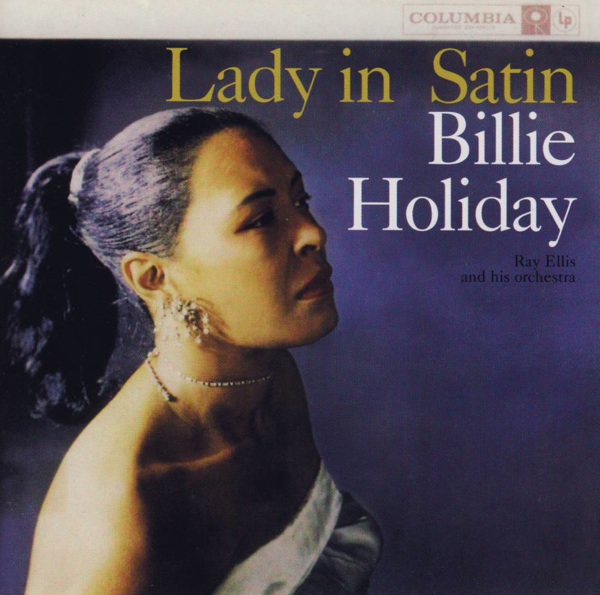
4. Lady in Satin, Billie Holiday.
The most controversial album by America's greatest singer, Lady in Satin has long divided its audiences & critics—& for obvious reasons. Holiday was far past her prime by the time she made these records & it shows in every gravely twist of every nuanced word. But Holiday's chief innovation to popular music was to bring the emotion of the song to the forefront, not simply singing the song but performing it, akin to how an actor might read their lines. Songs like "I'm a Fool for You," "You've Changed," & "I'll Be Around" aren't just heard but felt—often devastating torch ballads handpicked by Lady Day herself. Everyone from Frank Sinatra & Elvis on down has been influenced by her in one way or another, & this, her final masterwork, plays just like it sounds: A world-weary master standing at the end of a long road. It is also, not coincidentally, the work that she felt was the finest of her career.

5. Songs for Swingin' Lovers!, Frank Sinatra.

6. Highway 61 Revisited, Bob Dylan.
From the gunshot drum-hit opening "Like a Rolling Stone" through the surreal, winding finale of "Desolation Row," this is easily the most influential American album of the rock & roll era, & arguably the finest (really only Pet Sounds could challenge it). It was Dylan's first fully-electric album, released around the time he was plugging in at the Newport Folk Festival, & it captured the thrill & fury of his music—an endlessly fascinating sprawl of abstract poetry set to shambling garage rock that few would ever top, including Dylan himself. "Like a Rolling Stone" has since been voted the Greatest Rock & Roll Song of All-Time by Rolling Stone (natch!), but that's just the tip of the iceberg, as even ballads like "It Takes a Lot To Laugh, It Takes a Train to Cry" & "Ballad of a Thin Man" show that Dylan could be just as terminal even when things were slowed down. So, how does it feel? Pretty damn epic.

7. Never No Lament: The Blanton-Webster Band, Duke Ellington.
If Louis Armstrong was jazz music's heart—all spirit & joy—Duke Ellington was its mind—measured, considered, accomplished. Like Bloom's reckoning of Dante & Shakespeare, Armstrong & Ellington divide the jazz world, & between them, there is no third. These are the finest fruit of jazz's finest composer. They cover what is generally considered the finest period of Ellington's ever-fluctuating big band, named for bassist Jimmy Blanton & tenor saxophonist Ben Webster, in the period in which they overlapped between 1940-1942. It is, then, big band music perfected, with "Jack the Bear," "Ko Ko," "Cotton Tail," & Ellington's signature "Take the A Train." Like Armstrong's Hot Fives & Sevens, all are classics in their own right, & all refuse to be anything other than timeless.

8. Thriller, Michael Jackson.

9. Precious Lord: Recordings of the Great Gospel Songs of Thomas A. Dorsey, Various Artists.
Thomas A. Dorsey began his career as blues singer Georgia Tom, scoring a major hit in 1928 with the innuendo-filled "Tight Like That." Four years later, upon learning of the death of his wife & unborn child, & wrote "Precious Lord, Take My Hand." In true gospel style, he was a man reborn, & in time would become "the father of black gospel music." Fast-forward some 40 years & you have this album, a two-LP set in which Dorsey leads a band playing his signature hits with the cream of the gospel singing crop bringing them to life. There's rocking gospel (Alex Bradford's "It's a Highway to Heaven"), tight vocal groups (the Dixie Hummingbirds' "Hide Me in Thy Bosom"), & slow, meditative spirituals (Marion Williams on the title track). It's arguably America's finest gospel album—a standing further cemented by its presence in the Library of Congress's inaugural class of the National Recording Registry.

10. King of the Delta Blues Singers, Robert Johnson.
Did Robert Johnson actually sell his soul to the Devil in exchange for his amazing blues musicianship? We'll probably never know, but that doesn't matter—American myth has always proven greater than American truth, probably because it's always bigger. For, when you listen to mini-epics ("songs" feels like too tame of a word) like "Cross Road Blues," "Ramblin' on My Mind," "Stones in My Passway," & "Hell Hound on My Trail," it sure as hell sounds like a deal has been made with Satan (& bragged about in "Me & the Devil Blues"). This was music on a dark road that never ended, where any hope was sacrificed by pain, terror, & regret. Is it any wonder that everyone ever since (including Bob Dylan, the Rolling Stones, & Eric Clapton, among scores more) couldn't get enough of it?
* * *

 12. At Folsom Prison, Johnny Cash. If America could talk, it might have a voice like Johnny Cash's. Loud, forceful, & fearless, yet also able to spin a joke & tall-tale. When Cash recorded this, he met his match in the inmates of the California prison—indeed, just listen to the wild screams that follow his stone-cold "I shot a man in Reno, just to watch him die."
 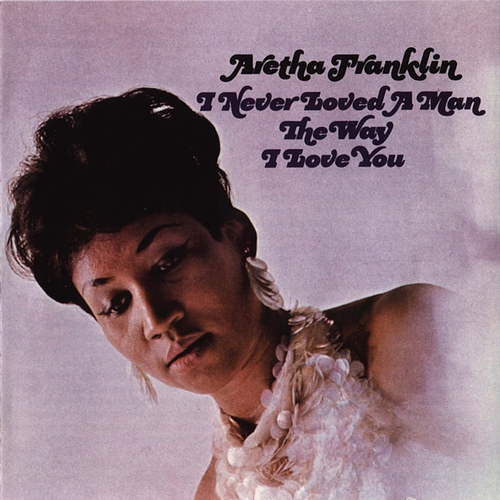 13. I Never Loved a Man the Way I Love You, Aretha Franklin. Lady Soul hit the ground running with this, her debut album for Atlantic Records. Songs like the title track & "Do Right Woman, Do Right Man," pushed the fervor of the sacred into the bedroom of the secular creating a sound. Throw in the timeless love-as-political anthem "Respect," & you have a record that is at once masterful & timeless.
 14. A Love Supreme, John Coltrane. Jazz as a sermon, meticulously conceived by one of its masters. It is somehow ethereal & focused, divine & rooted, & high-concept but easily accessible. The sound of Coltrane's horn is perfectly complemented by his combo's deft touch—& the result arguably beats rock's "concept album" by a few years.
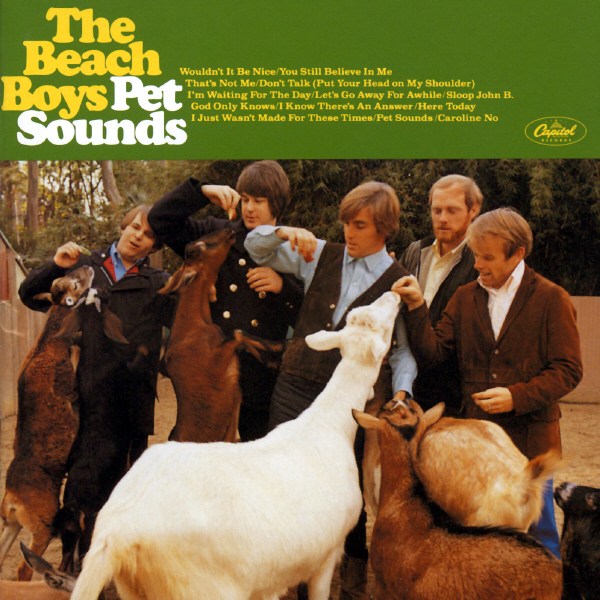 15. Pet Sounds, The Beach Boys. The finest LP by an American pop group of all-time, which perfected the rock album & inspired Sgt. Pepper, among countless other things. From the transcendent "Wouldn't It Be Nice" through the Caribbean folktale "Sloop John B." & the divine grace of "God Only Knows," few would ever top it.
 16. Live at the Apollo, James Brown. Nobody would finance a live album for James Brown, so he paid for it himself. & thank God that he did. The result is the finest live album in rock, with the Godfather of Soul earning his title with every strut, grunt, & plea. The extended "Lost Someone" is rightfully praised, but I love how he suddenly breaks into "Please, Please, Please" at the drop of a hat.
 17. Bing: His Legendary Years, 1941-1957, Bing Crosby. Four discs of the most influential vocalist in American history, who changed everything by plugging in a microphone & turning the belting-to-the-back-of-the-theater sound of the acoustic age into the quiet, sexy croon of the electric age. Songs like "Swinging on a Star" would make his legend, but it was his original version of "White Christmas" that remains the biggest-selling recording of all-time.
 18. Live at Carnegie Hall, Judy Garland. Take one legend at her height, put her in Carnegie Hall in front of adoring fans, & record the whole thing. The result is a best-selling & Grammy Award-winning hit, which is considered by many to be the finest night of American entertainment ever captured.
 19. Kind of Blue, Miles Davis. Miles Davis assembled one of the finest quintets in jazz history (including John Coltrane, Julian "Cannonball" Adderly, & Bill Evans, among others) & produced this, an uncompromised, meditative album of beautiful solitude & blissful rumination. It also just happens to be the best-selling jazz album of all-time.
 20. 40 Greatest Hits, Hank Williams. In 1949, Hank Williams became the first country singer to get 6 encores at the Grand Ole Opry; four years later, he was banned from the institution & dead at 29. This set contains the father of modern country music, its finest (& wittiest) songwriter, & a haunted performer all wrapped up in one, represented by signatures like "Move It Over," "Lovesick Blues," & "Your Cheatin' Heart."
 22. The Best of Muddy Waters. A crib sheet to the master of the electric blues, & some of the most influential music ever waxed. "Rollin' Stone" alone would in time lend itself to rock's finest song, most enduring band, & definitive magazine. Meanwhile, classics like "I'm Your Hoochie-Coochie Man" & "I Just Want to Make Love to You" are stone-cold standards of the modern blues.
23. Dust Bowl Ballads, Woody Guthrie. A State of the Union, c. 1935, as told by a folk-poet chronicling the apocalypse. This was singer-songwriter music in its rawest (& finest) form, with all of the grit & grime of the Oklahoma plains. "The Great Dust Storm" best told the tale, but it's "I Ain't Got No Home" & Dusty Old Dust" that have become the classics. It was an album with sullen faces here, gallows humor there, & dust everywhere else.
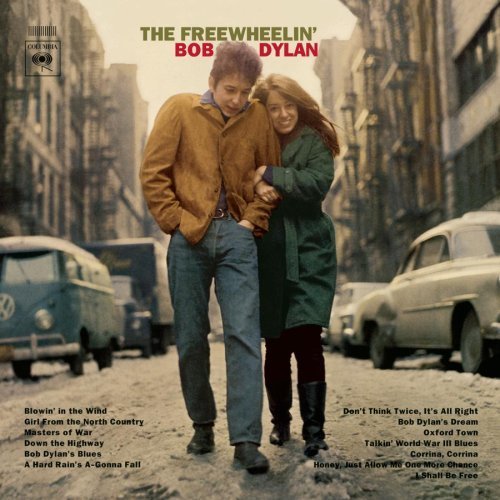 24. The Freewheelin' Bob Dylan. The portrait of the artist as a young folksinger, which all but doubles as a greatest hits of Dylan's early period. On his first album comprised (almost entirely) of original material, he would make his legend on "Don't Think Twice, It's Alright," "A Hard Rain's A-Gonna Fall," "Masters of War," & the Civil Rights anthem "Blowin' in the Wind," which he claims to have written in 10 minutes.
* * *
 26. The Complete Savoy & Dial Master Takes, Charlie Parker. Jazz broken apart & reassembled as bop, by the man who would define the sound; the future starts here.
 27. Lady Day: The Master Takes & Singles, Billie Holiday. Hear Holiday go full blossom from a featured performer to a vocal legend, like the gardenia that adorned her hair.
 28. Are You Experienced, Jimi Hendrix. Rock's finest debut & guitar's greatest genius takes acid (& music) as far as it can go in 1967.
29. Oklahoma!, Original Cast Recording. The first modern musical soundtrack—& as some like to tell it, the finest ever.
 30. It Takes a Nation of Millions To Hold Us Back, Public Enemy. Rap music's Sgt. Pepper is never badder than bad cuz a brother is madder than mad at the fact it's corrupt like a senator...
 31. Time Out!, Dave Brubeck. A rare time when the popular audience was ahead of the critics, recognizing the exploration of odd time signatures in clever songs that never tire.
 32. Where Did You Sleep Last Night?, Lead Belly. With the title track, grunge-tested & folklorist-approved—& for my money, the finest history of rock & roll you will ever hear.
33. Mingus Ah Um, Charles Mingus. A survey of African American music as led by jazz's most visionary bassist.

 35. Elvis' Golden Hits, Elvis Presley. "Hound Dog," "Heartbreak Hotel," "Don't Be Cruel," & all the rest of his peak, just before the Army came & stole his crown.
 36. West Side Story, Original Soundtrack Recording. Romeo & Juliet recast as a pop opera in New York City's Puerto Rican & American gangs singing—yet somehow it all works.
 38. Live at Carnegie Hall, Benny Goodman. Jazz goes uptown in the music's coming-out party, led by its greatest white innovator.
 39. The Great Twenty-Eight, Chuck Berry. With "Maybellene," "Roll Over Beethoven," & "Johnny B. Goode"—the finest telling of the American Dream I've ever heard.
 41. Will the Circle Be Unbroken, The Nitty Gritty Dirt Band. A history of country music as told by some of its masters—& the kids they inspired—in a triple-LP set that lives up to its title.
 42. Like a Prayer, Madonna. Is there a dancefloor in the church or a church in the dancefloor? Either way, the answer is the Queen of Pop's masterpiece.
43. Live at Regal, B.B. King. Electric blues finest album, led off by "Every Day I Have the Blues," but crescendoing with "How Blue Can You Get?"
 44. Red-Headed Stranger, Willie Nelson. A quiet song-cycle about a murderous preacher that all but solidified the '70s "outlaw" country sound.
 45. Porgy & Bess, Original Cast Recording. Two New York Jews dream of life in the South, where the livin' is easy...
 46. The Ramones. 1-2-3-4! As in: 1 sound, 2 minutes, 3 chords, 4 sick bubblegum singers posing as brothers—& inventing punk.
 47. Star Wars Soundtrack, John Williams. Voted the finest film soundtrack of all-time by the American Film Institute, & who's to argue with them? The LP that launched a thousand ringtones.
48. In the Wee Small Hours, Frank Sinatra. The Voice's other side—melancholy, looking into an empty glass, & crooning "One for My Baby (& One for The Road)."

49. Cajun Dance Party: Fais Do-Do, Various Artists. Included for Amede Adroin's 6 Columbia songs (canjun's earliest commercial recordings), buttressed by other early masters.
 50. Let Me Sing & I'm Happy, Al Jolson. America's most popular singer of the first half the 20th Century shows off his charisma in these tunes taken from his earliest talkies.


