Showing posts with label Sun Records. Show all posts

Sunday, December 4, 2016

The Million Dollar Quartet At 60.


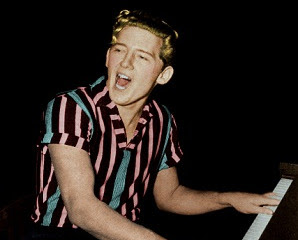
On December 4, 1956, Jerry Lee Lewis was at Sun Records playing piano on a Carl Perkins session when Elvis Presley came to the studio to say hello to some old friends; not long thereafter, Johnny Cash swung by to pick up a paycheck. The four began jamming, Sun founder Sam Phillips switched on the tape, and the legend of the Million Dollar Quartet was born.

There have been great dates in rock and roll before and after, but none so great as this one, 60 years ago today.

You've got February 9, 1964, when The Beatles played on The Ed Sullivan Show, and July 25, 1965, when Bob Dylan "went electric" at The Newport Folk Festival, but in those cases, historical context is the main driving force and the taped performances are secondary. The Beatles sound fine enough, if a bit rushed and nervous (for good reason), while Dylan's electric outfit sounded under-rehearsed and poorly mixed (which some claim is the real reason for the booing). In both cases, it is the audience that is the key element of the performance.

When Elvis, Jerry Lee, Carl, and Johnny jammed at the Million Dollar Quartet, there was no audience. Or not a traditional one, anyway. There were friends, girlfriends, and hanger-ons, and eventually the press as the ever-resourceful Phillips called the Memphis Press-Scimitar--people drifting in and out of the storefront studio. Instead of playing for audience, they were instead playing for each other, playing for history, and playing for posterity. They were playing for us.

I remember first being told the myth of the session when I visited Sun Records as a teenager. I dutifully bought the then-current 1990s release of the recordings and raced to listen to them. I figured it would be a Sun Records greatest hits album times four. "That's All Right," "Blue Suede Shoes," "Whole Lotta Shakin' Goin' On," "I Walk the Line," all the rest. This was gonna be great.

Turns out I was very wrong. With the exception of Elvis's "Don't Be Cruel"--more on that in minute--there were none of these hits, or any others. In fact, there was a lot of gospel. And country. And blues. And some more gospel.

As I kept listening, what had initially disappointed me about the session was the key to its invaluable worth. It was less a traditional rock and roll album as it was four founders of the music giving a history class. This was their common ground, a meeting place of fervor and joy. Which makes sense. If you got George Washington, John Adams, Thomas Jefferson, and Alexander Hamilton together, they'd probably be talking about Locke and Rousseau, as opposed to themselves.

But ironically, the finest moment of the session does come the one time one of the legends sings one of their biggest hits. Elvis had recently gone to Las Vegas and bombed, but while there caught a show by the R&B vocal group Billy Ward and His Dominoes. Despite the name, Ward was never the lead singer of the group, he was instead its founder and manager. The group first launched Clyde McPhatter--one of Elvis's biggest influences--who then left the group for his own major solo career at Atlantic Records. If Elvis had gone to see the Dominoes for his idol McPhatter, he was to be disappointed as a new singer was in his place.

Elvis remembers the singer trying to do a few of his songs--"Hound Dog" among them--but striking out. Then, he does "Don't Be Cruel." It was slower and more slender than his own version, Elvis explained, but in the end it was better than his. Elvis then tries to imitate the young African-American singer, who in turn was trying to imitate Elvis. "You know I can't be fo-oo-ound," Elvis sings while a guitar strums. "Sittin' home all a-ha-lone--" Then Jerry Lee's piano marches in with all of the subtlety of an elephant. Soon Carl's electric guitar snaps right in there too, while his band, still in their seats from his session, backing Elvis. "Don't be cruel," Elvis sings. "To a heart that's true..." As the group crashes to a finale, you can hear them reaching for the sound Elvis hears in his head. They don't quite get that sound, but what they create is even more exciting and visceral. Elvis keeps going back it, talking about how that young R&B singer emphasized "tel-e-phone" and how he stepped back with his head shaking, "I don't a-want no other a-love-ah..."

It turns out the singer that Elvis had gone to see was none other than a young Jackie Wilson, already proving himself to have the most exciting timing (and punctuation) of any singer of his era.

On the original 1990s CD I got of the session, "Don't Be Cruel" was sandwiched somewhere in the middle, with the gospel stuff on top and country run-throughs on the other side. Now, with the 50th Anniversary album that came out a decade ago, the chronology was mended and more songs were added to make a clearer picture of the day.

First we get Carl and Jerry Lee playing an instrumental, before jamming on "Jingle Bells" and "White Christmas," still with no vocals. Elvis steps out of the booth to talk about (and sing) Lowell Fulton's "Reconsider Baby," one of his favorite songs, which he will later record on his first album after being discharged from the Army. Although he is partially off-mic, he sounds just as he will in the familiar version from 1960. Then comes "Don't Be Cruel." It is the first complete performance, and the place in which everything comes together. This is clearly what Elvis is most excited about, and is eager to convey to his friends and fellow musicians.

From there, they slip into parlor music ("There's No Place Like Home") and a spiritual ("When the Saints Go Marchin' in"), and then into a string of gospel standards that are among the most memorable performances of the day. Elvis sings "Peace in the Valley" with all of the sorrow and regret that is only hinted at in his later studio version, "Down by the Riverside" and "I Shall Not Be Moved" are made into a cross between jump-blues and doo-wop.

"I am with a crowd, but oh so a-looooone," Elvis sings beginning the next set. The full band is gone, though Carl and Jerry Lee are still unhand to offer vocal support and ideas. Elvis's girlfriend requests "Farther Along," which again takes them from spiritual music to parlor music, followed by Elvis running down a list of his favorite songs, alternating between country and gospel. Carl gets in a lovely take at the gospel song "Keeper of the Key"; Elvis sings the praises of Pat Boone and his latest record, "Don't Forbid Me."

Then, just when you think it's all gone off the rails, they come together in the united front of Chuck Berry, all jamming on "Brown-Eyed Handsome Man." Elvis can't remember the words, so Carl and Jerry Lee help, coaxing him along, reminding each other of verses, laughing at jokes in the song that have become so familiar even the most ardent rock fan has forgotten they were ever heard as comical punchlines. They are like a bunch of old friends at the back of bar right at last call, playing to see if they can make it to the next verse. It is loose, easy music, with a sure sense of freedom.

Elvis then touches on "That's When Your Heartaches Begin," one of the first songs he recorded as an acetate at Sun, and brings the story full-circle. Then, he seems to disappear, and all that is left is Jerry Lee Lewis, ready and eager to debut the sides of his recent first release, "Crazy Arms" and "End of the Road." He then reaches back into the rag "Black Bottom Stomp" and then the Gene Autry standard "You're the Only Star in My Blue Heaven," and then you can hear everyone shaking hands and saying goodbye.

There has been over 45 performances of some 40 songs, including rock, pop, R&B, blues, country, bluegrass, spirituals, gospel, and Christmas songs. There have been standards like "When the Saints Go Marching in," "White Christmas," and yes, "Don't Be Cruel"; there have been obscure tunes like "Keeper of the Key," "Out of Sight, Out of Mind," and yes, "Don't Forbid Me." There have been songs that have been performed by Louis Armstrong, Bill Monroe, Jelly Roll Morton, Chuck Berry, Little Richard, Charley Patton, Bing Crosby, Jackie Wilson, The Ink Spots, and Gene Autry, not to mention songs sung by slaves, sharecroppers, and the Union Army of the Civil War.

And yet for all there is, let us pause to consider what there is not (at least to my ears, anyway): Johnny Cash.

Some have speculated that Cash only showed up for the newspaper photo shoot but split before the tapes began rolling; contemporary reports have him singing "Blueberry Hill" with the others, although that song has never been found with the tape. Cash himself claims in his autobiography that he indeed was there and can hear himself singing, only he is farthest from the mic and is singer in a higher range than his usual hit sound.

Maybe, but try as I may (and have), I can't hear him. Also, the fact that at one point Elvis's girlfriend asks "this Rover Boys' Trio" to sing a song leads me to believe there were only three principles there for the main part of the recording, as well as the fact that Elvis later mentions Johnny Cash by full name, in a way that seems to imply that Cash is not on the premises.

This is not to take away from the power of the sessions. If anything, it adds to their mystery. For even without Johnny Cash actually there (audibly, anyway), so much is. There is the stream-of-conscious history lesson of modern American music. There is the only known recordings of Elvis and Jerry Lee together. And there is the only full-length recording we have of Elvis talking at length and off-the-cuff about music. Seems crazy, but it's true.

It all adds up to a session that for me encompasses the whole of rock and roll, much more than a greatest hits album ever could. That said, the latter is almost too irresistible--just check out The Million Dollar Quartet musical by Floyd Mutrux and Colin Escott, which uses the session as a heavily-fictionalized structure by which to tell the story of these Sun Records legends, greatest hits and all. This is all well and good and I'm glad it gets the myth and music out to an even wider audience, but for me, the real magic is in the tape from December 4, 1956.

For all of its bum notes and tangents (both musical and conversational), it is a testament to a brave new music, the young men who made it, and the old world that they conjured up in doing so.

Saturday, December 19, 2015

The Top 5 Sun Records Songs Not Released As Singles.

Sun Studio, universally hailed as The Birthplace Of Rock & Roll, was an embarrassment of 1950s riches. Their roster formed a Mount Rushmore of rockabilly--Elvis Presley, Jerry Lee Lewis, Carl Perkins, & Johnny Cash--& even their second-stringers were future American musical masters like Roy Orbison & Charlie Rich.

But when you start stacking up what was actually released by each artist while they were on the label, the results are surprisingly small. Elvis released only 10 sides while he was at the label, while Carl Perkins only put out 19. Even Jerry Lee Lewis, who recorded the most extensively at Sun--a recent box set of his Sun output clocks in at 18 discs--only released about 2 CDs worth of material while he was employed as an artist there.

So what to do with all of the leftovers? Budget labels & bootleggers have been releasing this ever since, elevating some of these to minor classics in their own right. Everyone may know "That's All Right," "Blue Suede Shoes," & "Great Balls Of Fire," but these ones are arguably as worthy in their own way.

& before we begin, an honorable mention goes out to Carl Perkins' "Everybody's Trying To Be My Baby," which was left off of the list because although it was never released as a single, it was put on his 1957 Sun LP; all of the songs on this list were never released in any format on Sun Records.


5. "Trying To Get To You" by Elvis Presley.


Elvis famously released 10 sides on Sun Records between 1954 & 1955--5 bluesy A-sides backed by 5 country B-sides--& "Trying To Get To You" would've been the 11th side, if only Sam Phillips had a country song to back it with. Unfortunately for Phillips, Elvis signed with RCA before he could record one, which stipulated that Phillips hand over all of Elvis's masters to the new label. (Phillips was sure not to make this mistake again when Columbia signed Johnny Cash, allowing himself to have several years' & albums worth of Cash material ready despite his departure.) Sun's loss is Elvis's first album's gain as his cover of an R&B hit by The Eagles (no, not THAT Eagles--this one was an African-American doo-wop group who are so mysterious that I literally cannot even find a listing of the members' names) was a standout track on an already near-perfect album. It is Elvis's capstone at Sun, singing with all of the confidence & charisma that would carry him through the coming years--although some would argue with increasingly diminishing results.


4. "Domino" by Roy Orbison.


I've always had a soft-spot for Roy Orbison's work at Sun. Although it is overshadowed by his more influential subsequent work at Moment Records (& with ballads like "Cryin'" & rockers like "Oh, Pretty Woman" it's easy to see why), one can hear an eagerness & vulnerability all but absent from his peers. Elvis was the hot one, Jerry Lee Lewis was the crazy one, Johnny Cash was the tough one, Carl Perkins was the quiet one--& Roy Orbison was the awkward one. He didn't have the bravado of the others & to his credit, he didn't try to. Phillips didn't quite know what to do with him but Roy also didn't know what to do with himself either (how else can one explain the coupling of "Chicken Hearted" & "I Like Love" as a single?). In a sea of rebels, Roy was the guy you could relate to. "Domino," his finest Sun cut outside of "Ooby Dooby" & "Go! Go! Go!," was better than nearly all of the other sides he would release during his short stint at the label. One only has to listen to the likes of "Chicken Hearted" & "I Like Love" to get an idea of what people should've been hearing instead.


3. "Wild One" by Jerry Lee Lewis.


"Wild One" was originally written by Johnny O'Keefe, the first major Australian rock & roll star. It kicks, it's cute, it's got lots of saxophone. Enter The Killer. He doesn't so much cover the song as he does eat it up & spit it out as fire in his own image. Gone are the original lyrics, in its place are rushed, half-improvised new ones that allude to his own hits & style. Recorded in 1958, it wouldn't see the light of day until the 1970s, which is a shame because it out-classes "High School Confidential" & most other things that would follow. It's tempting to say it would've provided him with that comeback hit in the wake of his marriage scandal, but if the similarly excellent rave-up "Lovin' Up A Storm" couldn't crack the Top 80, this probably wouldn't have been able to either. Regardless, "Wild One" should with Aretha Franklin's "Respect" & Jimi Hendrix's "All Along The Watchtower" as one of rock's finest covers, but Jerry Lee Lewis so effectively makes it his own that few are even aware that it's a cover in the first place--because after all, Jerry Lee Lewis will always be rock & roll's most wild one.


2. "A Red Cadillac & A Black Mustache" by Warren Smith.


Of all the ones who shoulda-coulda-woulda made it at Sun but didn't, my vote for the least well-known with the best back catalog is Warren Smith. A country singer by trade, he took to the rock music much more naturally than, say, his Sun label-mate Johnny Cash. It was Cash who wrote (or bought for $40 from George Jones) Smith's first single, "Rock & Roll Ruby," which did well enough locally to ensure a few more sides. Despite rockabilly that was equal parts tough & driving (the classic "Ubangi Stomp") & strange & folksy (the "Old, Weird America"-invoking B-sides "Black Jack David" & "Miss Froggie"), the only national hit he ever got was "So Long, I'm Gone," which petered out at #74. Left in the can was this song, a haunting & moody evocation of lost love shrouded in jealousy & suspicion. Only one known take of it exists, placing it in the category of one-known-take wonders like Robert Johnson's "Hell Hound On My Trail" & Elvis's own "Mystery Train." This song alone stands as proof not only as Sun's depth of quality as a label, but of Warren Smith's effortless--& largely forgotten--talent.


1. "Put Your Cat Clothes On" by Carl Perkins.
 
 
On December 4, 1956, the most famous jam session in rock history took place at Sun Studio, where Elvis Presley, Jerry Lee Lewis, Carl Perkins, & Johnny Cash sang old gospel, country, & pop songs, over an hour of which made it onto the legendary "Million Dollar Quartet" tape. What is often overlooked is why half of The Million Dollar Quartet (Perkins & Lewis) were there in the first place--to cut a regular session. Perkins was on his way down--it was a little under a year since "Blue Suede Shoes" became a breakthrough smash & he was still looking for that elusive follow-up hit; Jerry Lee Lewis was on his way up--his first single, "Crazy Arms," was just newly released where it would become a local hit & launchpad to a year of glory. But for now, Perkins was the bigger star & this was his session--Lewis was there as an anonymous session man, reportedly to earn some money for Christmas presents. Out of this session came Perkins' masterpiece "Matchbox," which managed to make #67 on the pop charts as the B-side to the inferior "Your True Love."

But arguably better than both songs is "Put Your Cat Clothes On," one of the toughest & most exciting rockabilly record ever cut. Perkins sings with a force & fun that he only ever really matched with "Dixie Fried," rushing lines & keeping the festivities rocking. Also unique for a Perkins record is Lewis's piano solo. Usually Perkins' tight, well-measured electric guitar would play during the solos (as it does during the second musical break), but here a young Lewis takes center stage, with an offhand & breezy, carefree solo. His energy helps to fuel the song's drive & is what arguably pushes Perkins to such a rocking, memorable performance.

It unusual for two rock legends (one past & one future) to collaborate so organically, but therein lies the magic of "Put Your Cat Clothes On"--& by extension, Sun Studio.

Friday, March 27, 2015

Elvis At Sun: A Survey.

Elvis Presley was a recording artist at Sun Records for about a year & a half--from the summer of 1954 through the end of 1955. In that time, he released 10 sides over 5 singles, which have rightfully gone on to become ground zero for rock & roll music.

Over the years, various anthologies of Sun material have appeared--literally once every decade--each with its own merits. What follows is a survey of them, followed by a recommendation for a new one.

I did not bother ranking them on a 5-star scale because the material is excellent & they are all essentially different versions of the same story.


The Original: The Sun Sessions (RCA, 1976).


Tracklisting:

Side A

1. That's All Right
2. Blue Moon Of Kentucky
3. I Don't Care If The Sun Don't Shine
4. Good Rockin' Tonight
5. Milkcow Blues Boogie
6. You're A Heartbreaker
7. I'm Left, You're Right, She's Gone
8. Baby, Let's Play House

Side B

1. Mystery Train
2. I Forgot To Remember To Forget
3. I'll Never Let You Go (Little Darling)
4. I Love You Because
5. Trying To Get To You
6. Blue Moon
7. Just Because
8. I Love You Because [Alternate Take]

What's New?

The concept of putting (almost) all of Elvis's Sun recordings in a single place; "I Don't Care If The Sun Don't Shine" makes its album debut.

Accolades

#11 on Rolling Stone's 500 Greatest Albums Of All-Time (2004); #21 on VH1's 100 Greatest Albums Of Rock & Roll (2001).

Review

Despite the countless reissues RCA released while Elvis was alive, it appears that no one thought to put out a collection of his Sun material until 1976 (perhaps they were waiting for the Bicentennial?). As such, The Sun Sessions was the first time such a collection was assembled, & while it contained only one unreleased track--the alternate take of "I Love You Because" (although "I Don't Care If The Sun Don't Shine" had never appeared on LP before)--hearing all of the rest assembled in place was a revelation.

It may not have been perfect--I would like to know why "I Don't Care If The Sun Don't Shine" appears before its A-side "Good Rockin' Tonight" & "I'm Left, You're Right, She's Gone" appears before its A-side "Baby, Let's Play House"--but it was first, & sometimes that's all it takes. Although there were more Sun recordings were in the ether ("Tomorrow Night," which had only appeared in a badly-overdubbed version on a compilation LP in 1965 & "Harbor Lights," which appeared on Elvis: A Legendary Performer, Volume 2 earlier in 1976), this was the basic canon, at least as it was known at this point in time.

& even with its flaws, its missing material, & its ugly cover, it was a crowning achievement.

When Rolling Stone issued their 500 Greatest Albums Of All-Time list in 2004 to commemorate the 50th Anniversary of the birth of rock & roll (Elvis's recording of "That's All Right" in 1954), The Sun Sessions LP appeared at #11 on the list. It beat out the likes of Jimi Hendrix's Are You Experienced, The Velvet Underground & Nico, The Beatles' Abbey Road, Bruce Springsteen's Born To Run, Michael Jackson's Thriller, & Nirvana's Nevermind, even though it had been out of print for nearly 3 decades. Subsequent revisions of the list would substitute the excellent 2-disc expansion Sunrise (see below), but like with so much else in rock, it appeared that the original was still the greatest.


The Classic: The Sun Sessions CD (RCA, 1987).


Tracklisting:

1. That's All Right
2. Blue Moon Of Kentucky
3. Good Rockin' Tonight
4. I Don't Care If The Sun Don't Shine
5. Milkcow Blues Boogie
6. You're A Heartbreaker
7. Baby, Let's Play House
8. I'm Left, You're Right, She's Gone
9. Mystery Train
10. I Forgot To Remember To Forget
11. I Love You Because
12. Blue Moon
13. Tomorrow Night
14. I'll Never Let You Go (Little Darlin')
15. Just Because
16. Trying To Get To You
17. Harbor Lights [Take 4]
18. I Love You Because [Take 2]
19. That's All Right [Outtake]
20. Blue Moon Of Kentucky [Take 1]
21. I Don't Care If The Sun Don't Shine [Outtake]
22. I'm Left, You're Right, She's Gone (Slow Version) [Take 9]
23. I'll Never Let You Go (Little Darlin') [Outtake]
24. When It Rains It Really Pours [Outtake]
25. I Love You Because [Take 3]
26. I Love You Because [Take 4]*
27. I Love You Because [Take 5]
28. I'm Left, You're Right, She's Gone (Slow Version) [Take 7]
29. I'm Left, You're Right, She's Gone (Slow Version) [Take 8]*
30. I'm Left, You're Right, She's Gone (Slow Version) [Take 10]*
31. I'm Left, You're Right, She's Gone (Slow Version) [Take 11]*
32. I'm Left, You're Right, She's Gone (Slow Version) [Take 12]
33. I'm Left, You're Right, She's Gone (Slow Version) [Take 13]*

(* = Not on CD version)

What's New?

The Sun masters are completed, as "Harbor Lights," "Tomorrow Night," "When It Rains It Really Poors" & the slow version of "I'm Left You're Right, She's Gone" & TONS of alternate takes!

Accolades

Included in Rolling Stone's 200 Essential Rock Albums (1997).

Review

A great collection that fixes the issues of its LP forerunner. First, the single sides appear in the proper order. Secondly, & more importantly, for the first time, all the Sun masters are gathered in one place. It also included all of the existing outtakes (almost!--see below), which what it lacked in programming (have you ever listened to endless takes of "I'm Left, You're Right, She's Gone (Slow Version)" back to back?), it made up for in historical importance.

With the CD still in its relative infancy, RCA decided to issue the complete set on double vinyl & a single long-playing cassette; hence the 5 songs above left off of the CD to keep it on a single disc. What this meant is that if you bought the LP or tape, you were getting the complete collection of Elvis's Sun recordings, which is to say every known take that existed up to that time. The CD nearly gave you the same thing, although only a completist would notice the difference.

Still, it was excellently executed & one of the first major CD collections to make ample use of a compact disc's 80-minute running time.


The Modern Classic: Sunrise (RCA, 1999).


Tracklisting:

Disc 1

1. That's All Right
2. Blue Moon Of Kentucky
3. Good Rockin' Tonight
4. I Don't Care If The Sun Don't Shine
5. Milkcow Blues Boogie
6. You're A Heartbraker
7. Baby, Let's Play House
8. I'm Left, You're Right, She's Gone
9. I Forgot To Remember To Forget
10. Mystery Train
11. I Love You Because
12. Harbor Lights
13. Blue Moon
14. Tomorrow Night
15. I'll Never Let You Go (Lil' Darlin')
16. Just Because
17. I'm Left, You're Right, She's Gone (Slow Version)
18. Trying To Get To You
19. When It Rains It Really Pours

Disc 2

1. My Happiness [Private Recording]
2. That's When Your Heartaches Begin [Private Recording]
3. I'll Never Stand In Your Way [Private Recording]
4. It Wouldn't Be The Same Without You [Private Recording]
5. I Love You Because [Alternate]
6. That's All Right [Alternate]
7. Blue Moon Of Kentucky [Alternate]
8. Blue Moon [Alternate]
9. I'll Never Let You Go (Lil' Darlin') [Alternate]
10. I Don't Care If The Sun Don't Shine [Alternate]
11. I'm Left, You're Right, She's Gone (Slow Version) [Alternate]
12. Fool Fool Fool [Demo]
13. Shake, Rattle & Roll [Demo]
14. I'm Left, You're Right, She's Gone [Live]
15. That's All Right [Live]
16. Money Honey [Live]
17. Tweedle Dee [Live]
18. I Don't Care If The Sun Don't Shine [Live]
19. Hearts Of Stone [Live]

What's New?

Lots of stuff--the previously-unknown private recordings that Elvis made on his own dime, 2 demos from the period recorded at a Texas radio station that were first included in his boxed set of complete '50s masters, & live recordings from the Louisiana Hayride; Sunrise also marks the first time that "I'm Left, You're Right She's Gone (Slow Version)" is included among the masters & not the alternate takes.

Accolades

Time's 100 Essential Albums (2006); subsequent revisions of Rolling Stone's 500 Greatest Albums Of All-Time (since The Sun Sessions LP is long out-of-print & Sunrise lives on in iTunes).

Review

A well-made & worthy reissue that nonetheless could have been even better. When Sunrise came out, it was marketed as the fuller, more complete version of The Sun Sessions CD, & everyone seemed to take it at its word. However, Sunrise had only one alternate take of each song, meaning that the initial meat of the set--the Sun Records recordings--was incomplete. Even more frustrating was the fact that all of the unused alternates could have easily fit on the second disc. These could have been included along with (or perhaps in place of) the Louisiana Hayride recordings, which are historically valuable but are so poor in audio quality that they likely were never going to be listened to more than once. I suspect the live recordings were included so that the CD could list more distinct song titles, even though they were not nearly as listenable as anything else on the disc. (Furthermore, if it was to show the range of Elvis's then-current setlist, it also fails, as it leaves off his Louisiana Hayride version of "Maybellene," which had previously been issued on his complete '50s boxed set).

All of which is to say that although this is the first official double-CD of Elvis's Sun material, it ends up being a bunt instead of a home run. I believe that the RCA powers-that-be should've either expanded it to include all of the alternate takes to make it as complete as the Sun Sessions double-LP & cassette incarnation or left off the live recordings & make one cherry-picked disc.

Another far subtle feature of Sunrise is that it is the first to place "I Forgot To Remember To Forget" as the A-side of his final single, as opposed to "Mystery Train." This was done because "I Forgot To Remember To Forget" was Elvis's first national #1 single (on the Country & Western charts), & thus was determined to be the lead single in hindsight. In reality, both sides were released against each other, both battled for more airplay, & in the end, both charted nationally ("Mystery Train" hit #10 on the Country & Western charts). However, given the blues-rocker-backed-by-country model of every other single, I believe that Sun Records producer Sam Phillips intended "Mystery Train" to be the hit side & that it should appear before "I Forgot To Remember To Forget," like it does on The Sun Sessions LP & CD. From this point on, however, the reverse would be accepted as the standard, which to me sounds out-of-sequence with the rest of the singles.

Still, all that said, it is nice to have Elvis's 4 priceless private recordings assembled in one place for the first time. Until Sunrise, they were released bit by bit: "My Happiness" on The Great Performances CD, "That's When Your Heartaches Begin" on The Complete '50s Masters boxed set," & "I'll Never Stand In Your Way" on the Platinum: A Life In Music boxed set; "It Wouldn't Be The Same Without You" was issued here for the first time. It is also nice to have the versions of "Fool, Fool, Fool" & "Shake, Rattle, & Roll" that were cut at a Texas radio station during the Sun years (which first appeared on The Complete '50s Masters boxed set). Finally, it is nice to have it all live on in iTunes, even as CD versions of the album have grown scarce.


The Post-Modern Classic: Elvis At Sun (RCA, 2004).


Tracklisting:

1. Harbor Lights
2. I Love You Because [Alternate]
3. That's All Right
4. Blue Moon Of Kentucky
5. Blue Moon
6. Tomorrow Night
7. I'll Never Let You Go (Lil' Darlin')
8. Just Because
9. Good Rockin' Tonight
10. I Don't Care If The Sun Don't Shine
11. Milkcow Blues Boogie
12. You're A Heartbreaker
13. I'm Left, You're Right, She's Gone (Slow Version)
14. I'm Left, You're Right, She's Gone
15. Baby, Let's Play House
16. I Forgot To Remember To Forget
17. Mystery Train
18. Trying To Get To You
19. When It Rains, It Really Pours

What's New?

The sound, which is mastered so that the records sound more direct than ever before. Some have been skeptical of this, the Elvis sessions website has staunchly defended it. "When It Rains, It Really Pours" appears in a 2-minute master without any of the studio dialogue from the earlier issues & for the first time, the songs are presented in the order in which they were recorded, as opposed to the previous versions that put Elvis's 10 single sides up front, followed by the songs not originally issued.

Accolades

Included in 1,000 Recordings To Hear Before You Die (2008).

Review

Issued for the 50th anniversary of Elvis recording "That's All Right," Elvis At Sun was presumably to put a one-disc closer-to-budget-priced Sun collection on the market to provide an alternative to the 2-disc Sunrise. As such, it leaves off all of the private recordings, radio station demos, & live recordings for the 19 "modern" masters, soup to nuts, with no frills.

Almost.

For some unbeknownst reason, the producers included the alternate version of "I Love You Because" instead of the master. This was probably because the master version issued from RCA was a splice between 2 different takes. Still, I believe that they should have included the spliced RCA master & tack on the alternate version of "I Love You Because" at the end, a la the original Sun Sessions LP. This one song notwithstanding, Elvis At Sun is the closet to the original Sun Sessions LP than anything that had appeared since. It simply collects all the master recordings in one place.

As for the sound, it definitely is more immediate, but I've always chalked that up to the way in which CDs have been remastered. To my ears, The Sun Sessions CD now sounds like a CD from 1987--good but muffled; it needs to be turned up to fully appreciated. I also always found the Sunrise CD set to mastered a bit too quietly as well, especially when compared to the brightness of a collection like ELV1S: 30 #1 Hits, which was released  only 3 years later.

Elvis At Sun sounds to me less like a tampering with the original recordings than it does a more modernly-mastered recorded that puts the music more front-&-center than its predecessors. But in all such aesthetic cases, you ultimately just have to decide for yourself.


The Deluxe Treatment: A Boy From Tupelo: The Complete 1953-55 Recordings (FTD, 2012)


Tracklisting:

Disc 1: The MRS Acetates, The Sun Masters & The RCA Masters

1. My Happiness [Private Recording]
2. That's When Your Heartaches Begin [Private Recording]
3. I'll Never Stand In Your Way [Private Recording]
4. It Wouldn't Be The Same Without You [Private Recording]
5. Harbor Lights
6. I Love You Because
7. That's All Right
8. Blue Moon Of Kentucky
9. Blue Moon
10. Tomorrow Night
11. I'll Never Let You Go (Little Darlin')
12. I Don't Care If The Sun Don't Shine
13. Just Because
14. Good Rockin' Tonight
15. Milkcow Blues Boogie
16. You're A Heartbreaker
17. I'm Left, You're Right, She's Gone (Slow Version)
18. Baby, Let's Play House
19. I'm Left, You're Right, She's Gone
20. I Forgot To Remember To Forget
21. Mystery Train
22. Tryin' To Get To You
23. When It Rains It Pours
24. That's All Right [RCA Single Version]
25. Blue Moon Of Kentucky [RCA Single Version]
26. I Love You Because [RCA LP Version]
27. Tomorrow Night [RCA LP Version]

Disc 2: The Sun Studio Sessions

1. Harbor Lights [Takes 1-2]
2. Harbor Lights [Take 3/M]
3. Harbor Lights [Take 4]
4. Harbor Lights [Take 5-6]
5. Harbor Lights [Take 7]
6. Harbor Lights [Take 8]
7. I Love You Because [Take 1]
8. I Love You Because [Take 2]
9. I Love You Because [Take 3]
10. I Love You Because [Take 4]
11. I Love You Because [Take 5]
12. That's All Right [Take 1-2]
13. That's All Right [Take 3]
14. Dialogue
15. Blue Moon Of Kentucky [Outtake]
16. Blue Moon [Take 1-3]
17. Blue Moon [Take 4]
18. Blue Moon [Take 5]
19. Blue Moon [Take 6-7]
20. Blue Moon [Take 8]
21. Blue Moon [Take 9/M]
22. Dialog Fragment [Before "Tomorrow Night"]
23. I'll Never Let You Go (Little Darlin') [Incomplete Take]
24. Good Rockin' Tonight [Fragment From Vocal Slapback Tape]
25. I Don't Care If The Sun Don't Shine [Takes 1-2]
26. I Don't Care If The Sun Don't Shine [Take 3/M]
27. I'm Left, You're Right, She's Gone (Slow Version) [Take 1]
28. I'm Left, You're Right, She's Gone (Slow Version) [Take 2]
29. I'm Left, You're Right, She's Gone (Slow Version) [Take 3]
30. I'm Left, You're Right, She's Gone (Slow Version) [Take 4]
31. I'm Left, You're Right, She's Gone (Slow Version) [Take 5/M]
32. I'm Left, You're Right, She's Gone (Slow Version) [Take 6]
33. I'm Left, You're Right, She's Gone (Slow Version) [Take 7]
34. How Do You Think I Feel [Guitar Slapback Tape, Rehearsal & Take 1]
35. How Do You Think I Feel [Guitar Slapback Tape, Rehearsals]
36. When It Rains It Pours [Take 1]
37. When It Rains It Pours [Take 2]
38. When It Rains It Pours [Take 3-4]
39. When It Rains It Pours [Take 5/M]
40. When It Rains It Pours [Take 6-7]
41. When It Rains It Pours [Take 8]

Disc 3: Live & Radio Performances

1. That's All Right [Live]
2. Blue Moon Of Kentucky [Live]
3. Shake, Rattle & Roll [Demo]
4. Fool, Fool, Fool [Demo]
5. Hearts Of Stone [Live]
6. That's All Right [Live]
7. Tweedlee Dee [Live]
8. Shake, Rattle & Roll [Live]
9. KSIJ Radio Commercial With DJ Tom Perryman
10. Money Honey [Live]
11. Blue Moon Of Kentucky [Live]
12. I Don't Care If The Sun Don't Shine [Live]
13. That's All Right [Live]
14. Tweedlee Dee [Live]
15. Money Honey [Live]
16. Hearts Of Stone [Live]
17. Shake, Rattle & Roll [Live]
18. Little Mama [Live]
19. You're A Heartbreaker [Live]
20. Good Rockin' Tonight [Live]
21. Baby, Let's Play House [Live]
22. Blue Moon Of Kentucky [Live]
23. I Got A Woman [Live]
24. That's All Right [Live]
25. Tweedlee Dee [Live]
26. Interview With Mae Boren Axton [Live]
27. That's All Right [Live]
28. I'm Left, You're Right, She's Gone [Live]
29. Baby, Let's Play House [Live]
30. Maybellene [Live]
31. That's All Right [Live]
32. Interview With Bob Neal

What's New?

Lots of stuff--including every extant master (regular & overdubbed), alternate take, & live recording. Completely new are some of the takes of "Harbor Lights," "Blue Moon," "When It Rains It Pours," & some of the dialogue fragments; the outtake versions of "How Do You Think I Feel" (on which you can only hear Scotty Moore's electric guitar, not Elvis); & some of the live recordings, including the recently-discovered live recording "Little Mama." Also, & of course, no collection had gathered all of this material so exhaustively.

Accolades

Tons of glowing reviews from the Elvis blogs, almost all of which lament the fact that it was a limited-time release that has since gone out of print.

Review

An anthology fit for a King. Elvis fans are such a rabid force that the Elvis powers-that-be created Follow That Dream (FTD) Records, which has been tasked with reissuing collector's editions of Elvis's recordings.

While most chronicle obscure movie soundtracks or periods of recording, the A Boy From Tupelo set is the rare FTD that deserves to be issued on the main RCA label. At the very least, the first 2 discs should be put out as a "Complete Sun Studio Sessions" set.

It fixes all the problems of the previous collections with its completeness. For example, on a song like "I Love You Because," the set includes the spliced version from Elvis's first RCA album, along with the 5 takes that survive from the original recording session. No piece is too small--such as the recently-discovered 10-second clip from the slapback fragment of "Good Rockin' Tonight." With entire masters missing long ago (such as for songs like "Milkcow Blues Boogie" & "You're A Heartbreaker," which were mastered from 78 records), this is a testament to everything we have--until something new is discovered.

Pretty much the only critique that can be made is that it was a limited-release set that is now woefully out-of-print. Besides that, there is nothing missing because this set literally has everything.


The Recommendation: Sunrise: Elvis Presley's Sun Sessions.


The Tracklisting:

That's All Right
2. Blue Moon Of Kentucky
3. Good Rockin' Tonight
4. I Don't Care If The Sun Don't Shine
5. Milkcow Blues Boogie
6. You're A Heartbraker
7. Baby, Let's Play House
8. I'm Left, You're Right, She's Gone
9. Mystery Train
10. I Forgot To Remember To Forget
11. I Love You Because
12. Harbor Lights
13. Blue Moon
14. Tomorrow Night
15. I'll Never Let You Go (Lil' Darlin')
16. Just Because
17. I'm Left, You're Right, She's Gone (Slow Version)
18. Trying To Get To You
19. When It Rains It Pours [Edit]
20. My Happiness [Private Recording]
21. That's When Your Heartaches Begin [Private Recording]
22. I'll Never Stand In Your Way [Private Recording]
23. It Wouldn't Be The Same Without You [Private Recording]
24. I Love You Because [Alternate]
25. That's All Right [Alternate]
26. Blue Moon Of Kentucky [Alternate]
27. Blue Moon [Alternate]
28. I'll Never Let You Go (Lil' Darlin') [Alternate]
29. I Don't Care If The Sun Don't Shine [Alternate]
30. I'm Left, You're Right, She's Gone (Slow Version) [Alternate]
31. Fool Fool Fool [Demo]
32. Shake, Rattle & Roll [Demo]

Review

I recently discovered that if you take Sunrise, leave off the live recordings at the end, & use the edited "master" version of "When It Rains It Pours" that was issued on Elvis At Sun, it all fits onto a single disc. Therefore, I propose to do just that, fitting all of Elvis's masters--& a sampling of alternate takes--onto one CD.

I like the Sunrise model of putting the 10 single sides upfront first (with "Mystery Train" appearing before "I Forgot To Remember To Forget"), followed by all of his other masters in chronological order, which in turn are followed by the private recordings & alternate takes that provide a sort of alternative history of the music. I also like Sunrise's cover, which I would also keep.

One thing I would change is the sound quality. Even as an iTunes download, Sunrise sounds kind of low & muffled & would benefit from a remaster to make it more along the lines of Elvis At Sun.

So basically, if you take the essence of Sunrise, edit it around a little, & make it sound like Elvis At Sun, you have a definitive single-disc set.

Until they figure out a new way to release A Boy From Tupelo on a larger scale--or simply discover new hereto-unknown pieces of the puzzle.

Tuesday, December 4, 2012

The Legend of the Million Dollar Quartet.

The Million Dollar Quartet, l-r: Jerry Lee Lewis, Carl Perkins, Elvis Presley, & Johnny Cash.

On December 4, 1956, Elvis Presley swung by his old label, Sun Records, where he found Carl Perkins cutting a session with a then-unknown Jerry Lee Lewis playing backup on piano; just then, Johnny Cash popped his head in while out shopping for Christmas presents, & the legend of the "Million Dollar Quartet" was born.

The truth, as it always is, is more complicated & less romantic: While the first part is essentially true, it seems like Cash was probably called in specifically from his house to complete Sun Records' rock & roll Mt. Rushmore. Also, Cash is inconspicuously absent from the recordings made that day, despite the iconic photo above & the contemporary newspaper report of the guys singing "Blueberry Hill," which is nowhere to be found.

But, as the Gods say, close enough.

The recordings that do survive of the Million Dollar Trio (if you will) are one of rock & roll's great lost founding documents, often overlooked for the very thing that makes them so fascinating: For all of the different things they sing — from "White Christmas" to "When the Saints Go Marchin' In" — there is very little of what we would think of as rock & roll. There's no "Blue Suede Shoes" or "Whole Lotta Shakin' Goin' On," & the only time Elvis does break into one of his classics, "Don't Be Cruel," it's to describe how an African-American performer sung the song better than him (the singer turned out to be a young Jackie Wilson).

Elvis imitating Jackie Wilson imitating Elvis imitating Dean Martin or whoever he had in his head the day he recorded "Don't Be Cruel" is essential listening, & should be sought out by any fan of music.

Yet it is a very poor indicator of the music made that day, which was partly blues, partly country, but mostly gospel. After blues & country, gospel music gets the short end of the stick, but here Elvis, Jerry Lee, & Carl make a case for it as being rock's great lost third influence. Check out the boys singing "I Shall Not Be Moved" — a gospel song in form & lyric, to be sure, but country-blues rockabilly in every other way, from the boogie rhythm to Carl's snapping solos:


Not only are these tapes the only known recordings of Elvis & Jerry Lee together, they are the only known records of Elvis talking freely about music, period, filled out by a stream-of-conscious playlist of illustrations. It would be like the Founding Fathers made a webcast of themselves raiding Thomas Jefferson's bookshelf. Only a lot more fun to listen to.

Tuesday, October 30, 2012

The Jerry Lee Lewis Paradox.

The Jerry Lee Lewis Paradox is simple: There is no legend bigger in rock & roll who has built their name on a smaller number of actual hits.

There were, officially, 5:

"Whole Lotta Shakin' Goin' On" (#3 Pop), 1957.
"Great Balls of Fire" (#2 Pop), 1957.
"Breathless" (#7 Pop), 1958.
"High School Confidential" (#21 Pop), 1958.
"What'd I Say" (#25 Pop), 1961.

Of those 5, only 4 fall within his crucial period of influence before his great fall: "Whole Lotta Shakin' Goin' On," "Great Balls of Fire," "Breathless," & "High School Confidential."

Of those 4, only 3 are actual rock & roll classics, as in, songs that get played on oldies radio: "Whole Lotta Shakin' Goin' On," "Great Balls of Fire," & "Breathless."

Of those 3, only 2 of the songs are actually considered top-notch rock & roll "great": "Whole Lotta Shakin' Goin' On" & "Great Balls of Fire."

The former is what no less of a source than John Lennon dubbed something that rock & roll has never improved upon; the latter is, for my money, the wildest rock & roll record of them all.

No small feat, to be sure, except for its, well, smallness.


* * *

But there is a second Jerry Lee Lewis Paradox that overlaps with the first: Perhaps no other artist has had such a small number of hits that have inversely yielded such a large number of greatest hits collections.

Ever since Jerry Lee Lewis had his (first?) comeback as a country star in the late '60s, there has been a steady stream of greatest-hits, best-ofs, boxed sets, rarities, retreads, & anthologies. Yet no one has sat down & made a definitive compilation that rivals the stone-cold compilation classics Elvis's Golden Records, Chuck Berry's The Great Twenty-Eight, Little Richard's Here's Little Richard, & Buddy Holly's The "Chirping" Crickets (OK, so those last two are "regular" albums, but they are made up almost entirely of hit singles & B-sides), although many have come close. A review:


The Original: Jerry Lee Lewis's Original Sun Greatest Hits, Vol. 1 & 2.

Counter-intiutive though it may seem, the first great Jerry Lee Lewis comp was only released to debunk an imposter. By 1968, Jerry Lee Lewis had finally found his way out of his decade in the desert, cashing in on a new sound on a new label. Rather then license Lewis's old Sun recordings (that wouldn't yield enough money—!), they simply had their star go ahead & record new versions of them, issuing them on an album (Jerry Lee Lewis's Golden Hits) that doubtless duped the majority who bought it into thinking that they were getting the real thing.

Sun Records quickly put out their own version — hence the unwieldy "Original" in the title — to stake their claim on the real thing. & for the most part, they get it right. Over the 8 of the 11 songs are the A & B-sides of his first four singles (that is, the first three listed above, plus one that came out before "Whole Lotta Shakin' Goin' On" — "Crazy Arms" — that was a local hit, but missed the national charts). The remaining three songs are a waste: a cover of Chuck Berry's "Little Queenie" that added nothing to the original, the non-hit "Teenage Letter," & "Lewis Boogie," a fine (& rare!) Lewis original that should've never been included over the somehow overlooked "High School Confidential."

Not surprisingly, this set the stage for a volume two, which picked up "High School Confidential" & its flip, "What I'd Say," & several near-hits: "Break-Up" (1958, #52 Pop), "I'll Make It All Up to You" (1958, #85 Pop), "I'll Sail My Ship Alone" (1959, #93 Pop), ("How's My Ex Treating You?," 1962, #98 Pop).  Filling out the rest are 3 covers: 1 classic ("Mean Woman Blues"), 1 near-classic ("Money"), & 1 not-very-remarkable classic ("How's My Ex Treating You?").  Put together with the first volume, it's a solid, if not amazing, collection.  The thing is, since it only runs 54 minutes, you can fit at least another half-dozen of worthy Sun-era contenders to the playlist, such as "Wild One," "Lovin' Up a Storm" (1959, #81 Pop), & "Let's Talk About Us" (1959, #76 Pop), the latter two of which are his only other charting singles of the 1950s.

Taken together as a two-fer (which is how they were reissued about a decade ago), I'd say 3.5/5 stars.


The Classic: 18 Original Sun Greatest Hits.

In the early 1980s, Rhino Records was evolving from a local label specializing in compilations into the premiere label for compilations. (Arguably international too, but that depends on how you feel about the German Bear Family label — the only label, by the way, to ever release an anthology of Jerry Lee Lewis's entire Sun Records output, on 8 CDs.) One of the discs they made their name on was this.

Long favored by the Rolling Stone Album Guide as the best single-disc collection of Lewis's music out there, it does its job remarkably well.  It was clearly compiled to include the hits, as evidenced by the opening sweep of "Whole Lotta Shakin' Goin' On," "Great Balls of Fire," "Breathless," "High School Confidential," & "What I'd Say" in an epic 5-song sweep.  The rest are a range of highlights from his debut album ("Matchbox," "Jambalaya," "When the Saints Go Marching In," "Ubangi Stomp," "Put Me Down"), fan favorites ("Lewis Boogie," "It'll Be Me," "Big Blon' Baby," "Crazy Arms," & "Wild One"), & some deep cuts ("Drinkin' Wine Spo-Dee-O-Dee," "All Night Long," & "Big-Legged Woman").  It's one of those successful comps in that as you're listening to it, you don't notice anything missing.

But there is: B-sides.  Aside from "It'll Be Me," none of Jerry Lee Lewis's classic singles have their B-sides to go with them.  Maybe they felt "You Win Again" & "Fools Like Me" were too country sounding — but not much more so than "Jambalaya" or "Crazy Arms" — but they really have no excuse for omitting "The End of the Road," "Down the Line," & perhaps even "Livin' Lovin' Wreck."

As such, it tells a great story, but only about half of it.

I'd give it 4.5/5 stars.


The Modern Classic: The Jerry Lee Lewis Anthology: All Killer, No Filler!

This has become the default Jerry Lee Lewis collection of the modern era. It made Rolling Stone's list of the 200 Essential Albums, then cropped up again a little over a decade later on its list of rock's 500 Greatest Albums, even though it had been long out of print. But as Jerry Lee Lewis comps go, it was a watershed: Assembled with love by Rhino Records, the album marked the 1st time that a collection held material from all of his various labels — Sun, Smash, & Mercury — spread over 2 discs of rock, country, blues, & pop.

If the most famous era of his work — the early rockabilly — got the thrift, that was the point. The entire Sun output is summarized in a dozen songs, but with the A & B sides of each of his first 4 singles, plus "High School Confidential," it held together deceptively well. Much more time was allotted for Lewis's country hits, which took up the remaining disc & a half. Because of the huge divide between rock & country, this was all pretty unfamiliar territory to the average rock fan, but it worked because Lewis was always a stylist first & a singer second, lending his voice & key-raking fingers to material as disparate as "Chantilly Lace" & "Over the Rainbow."

This would be the perfect set it feels like, if only it included Lewis's other two Top 40 hits — namely, the how-is-it-possible? MIA "What'd I Say" & the surprise hit country flip "Me & Bobby McGee" (1971, #40 Pop) — & his one other Top 10 country song, "Sometimes a Memory Just Ain't Enough." As for "McGee," its easy to understand because IT COMPLETELY SUCKS (where Joplin took a country song, sang it like blues, & made it pop, Lewis takes a country song, makes it a weird boogie shuffle, & is then joined by the nerdiest-sounding backing vocals ever heard outside of a novelty record), but one thinks they could've included it for completist's sake. "What'd I Say" & "Memory" are more mysterious — they are both solid in & of themselves, & with each disc running a little over 60 mins, there was more than enough room to include them.

This would be 5 stars — it feels like 5 stars — but given the rockabilly years given the thrift, I'm gonna make this one 4.5 out of 5 as well.


The Post-"Modern Classic" Classic: Jerry Lee Lewis: The Definitive Collection.

All told there is only one album that actually includes all of Jerry Lee Lewis's Top 40 hits: Hip-O Records' The Definitive Collection, which, in filling the hole left by Rhino's out-of-print classic, plays like The Jerry Lee Lewis Anthology Lite. Running at one disc & 24 songs, it is the only place where you can get every Top 40 hit: "Whole Lotta Shakin' Goin' On," "Great Balls of Fire," "Breathless," "High School Confidential," "What'd I Say," & "Me & Bobby McGee" (the first 5 of which are included in the album's first 6 songs; only "You Win Again" got added to the Sun period). The set also adds "Memory," as though just to jab Rhino's collection for overlooking it. But with only 24 songs, it can hold at least another 4, so I made my own playlist (yer welcome) that can be made using this disc as yer base & adding a few songs from the Rhino Anthology, since they're mastered at roughly equivalent volumes:

1. Crazy Arms*
2. Whole Lotta Shakoin' Goin' On
3. Great Balls of Fire
4. You Win Again
5. Breathless
6. High School Confidential
7. Break-Up*
8. What'd I Say
9. Another Place, Another Time
10. What's Made Milwaukee Famous
11. She Still Comes Around (To Love What's Left of Me)
12. To Make Love Sweeter for You
13. One Has My Name
14. Don't Let Me Cross Over
15. She Even Woke Me Up To Say Goodbye
16. One Minute Past Eternity*
17. Once More with Feeling
18. There Must Be More to Love Than This
19. Touching Home*
20. Me & Bobby McGee
21. Would You Take Another Chance on Me?
22. Chantilly Lace
23. Drinking Wine Spo-Dee-O-Dee
24. Sometimes a Memory Just Ain't Enough
25. He Can't Fill My Shoes
26. Middle Age Crazy
27. Over the Rainbow
28. Thirty-Nine & Holding

So 4 songs were added in total: "Crazy Arms," which has somehow been written out of Lewis's chronology these days — his 3-disc Half Century of Hits & 2-disc Gold both omit it, with the latter clearly trying to use "The End of the Road" in its place — & is the biggest overlook of the initial Definitive song list; "Break-Up" to grab one more Sun-era slot &, outside of "What'd I Say," the only other Top 50 hit he would ever have; "One Minute Past Eternity," which made it all the way to #2 Country; & "Touching Home," which made it to #3. With this playlist, you have all of Lewis's Top 40 Pop hits & Top 5 Country hits. (For the record, it is possible to fit all of Lewis's Top 10 Country hits — he had 28 — onto a single disc, but it doesn't tell the story as clearly).

I also corrected some screw-ups with chronology — mainly, "Another Place, Another Time" coming before "What Made Milwaukee Famous," a choice that made no sense at all. & finally, I replaced the version of "Drinking Wine Spo-Dee-O-Dee" with the classic version that was almost a Top 40 hit (1973, #41 Pop), because the original running order mysteriously used a different version from a decade earlier.

The original version: 4/5 Stars; my version with bonus tracks: 5/5 Stars.


* * *

Now I know what yer all thinking, "Hey man, you got really off-track here. I just want Jerry Lee Lewis the rocker, man, the rocker & none of that country junk."

Well, would you believe that I have been writing this whole article fer one reason & one reason only: To single-handedly petition the powers at Sun Records to release what I call...


My D.I.Y. Classic: Great Ball of Fire: The Original Sun Discography (1956-1959).

It turns out that Jerry Lee Lewis released so little (he recorded a ton more) that you can make it through his entire hit career & then some, with the only Top 40 hit lost "What'd I Say."  Check it:

Singles (1956-1957):
1. Crazy Arms
2. End of the Road
3. Whole Lotta Shakin' Goin' On
4. It'll Be Me [Single Version]
5. Great Balls of Fire
6. You Win Again.

The Great Ball of Fire EP (& source of this album's "cover") (1958):
7. Mean Woman Blues
8. I'm Feelin' Sorry
9. Turn Around

Singles (1958)
10. Breathless
11. Down the Line
12. High School Confidential
13. Fools Like Me

Jerry Lee Lewis LP (1958):
14. Don't Be Cruel
15. Goodnight Irene
16. It All Depends (On Who Will Buy the Wine)
17. Put Me Down
18. Ubangi Stomp
19. Jambalaya (On the Bayou)
20. When the Saints Go Marching In
21. Matchbox
22. It'll Be Me [LP Version]

Singles (1958-1959)
23. The Return of Jerry Lee
24. Lewis Boogie
25. Break-Up
26. I'll Make It All Up to You
27. I'll Sail My Ship Alone
28. It Hurts Me So
29. Lovin' Up a Storm
30. Big Blon' Baby

You get Lewis's first 9 singles, plus his first EP & LP, taking you from the original sound to the post-scandal oblivion.

& it all works because he has so few hits.

In fact, maybe it wasn't that he had so few hits as he had so little put out in the first place.

Putting it all together in this "Original Discography" comp is a very tempting solution — who knew that everything you could ever want — i.e., not just the best of his career, but the entire main arc of his career — could fit onto a single disc? I think I just out-paradoxed the paradox.

Well, probably the good folks at Sun Records know this, & fer want of selling records, have purposely never released it.

Although I think they really should.

Obviously.


[Ed. Note: If you dig this, check out a similar American Wolf post about Elvis: The Elvis Anthology Problem.]