Showing posts with label Country. Show all posts

Saturday, January 13, 2018

Johnny Cash At Folsom Prison At 50.


Fifty years ago today, Johnny Cash recorded the concerts that would provide the basis for one of the most celebrated albums in American music, At Folsom Prison.

The idea of the concert itself proves nearly irresistible--The Man In Black staring down a prison full of prisoners as his audience--no wonder it provided the focal point of the well-intended but overrated (& historically shoddy, it must be said) I Walk The Line film in the early '00s.

Many have noted that his setlist wasn't one of his traditional hits, but rather a few hits surrounded by B-sides & album cuts, love ballads & murder ballads, work songs & folk songs, spirituals & novelties. This wasn't so much a tour of Johnny Cash's country music as it was a tour of Johnny Cash's country's music. For everything that America may or may not have been to its citizens in the revolutionary days of 1968, Johnny Cash's At Folsom Prison played like the eye of the storm, a study of America held up & stripped down to its core.

* * *

America, it loves to tell itself, is The Land Of The Free. This is not lost on anybody, least of all Johnny Cash.

"The culture of a thousand years is shattered with the clanging of the cell door behind you," he writes on the back of the LP. "Life outside, behind you immediately becomes unreal. You begin to not care that it exists. All you have with you in the cell is your bare animal instincts."

Cash notes later in the essay that he speaks from experience, having been behind bars a few times in his own life. But certainly he never experienced anything like the convicts of Folsom Prison.

Aside from Henry David Thoreau, America is not one to celebrate its prisons; as the land of the free, it stands to reason, these are the people who have failed America, or, perhaps, America has failed. Either way, it plays like a camera obscura of what's supposed to be The Land Of Opportunity.

So what does Johnny Cash have to say to these people? He doesn't pander, he doesn't preach, he doesn't patronize. He seems to have an uncanny ability to place himself in their shoes & provide the range of material they hunger for. He knows that this is not just entertainment, but a piece of home--of America--that he alone can provide.

He's also a master showman.

He throws them a few murder ballads, the first of which, "Folsom Prison Blues" both opens the concert & provides its peak--just listen to the roar that is evoked by the line "I shot a man in Reno, just to watch him die." Although "Folsom Prison Blues" is perhaps Cash's most famous song now, it was originally recorded at Sun Records in 1955 & released as a B-side to his first Top 10 country hit, "So Doggone Lonesome."

By the time he recorded this version of the song some 13 years later, he was on Columbia Records, who released this live version from At Folsom Prison as a single, where it gave him his first #1 country hit in four years.

But "Folsom Prison Blues" wasn't the only murder ballad in the set--there was also the rousing "Cocaine Blues" which gave the inmates another classic line at which to roar ("I took a shot of cocaine & I shot my woman down"). In between was Merle Travis's classic coal mining lament, "Dark As A Dungeon," & the prettiest song of the set, "I Still Miss Someone," which sounds like it was a major hit but was actually only released as the B-side to "Don't Take Your Guns To Town" in 1959.

He then goes into the first novelty song of the set--the crazy countdown of "25 Minutes To Go," a literal dose of gallows humor penned by songwriter & children's poet Shel Silverstein (who would later write one of Cash's biggest hits, "A Boy Named Sue," which itself spawned one of the greatest novelty song titles in history, "A Girl Named Johnny Cash," but I digress).

Already in five songs, we have gone from murder ballads to work songs to love songs, back to murder ballads & then a comedy song. Next stop? One of Cash's favorite thematic genres: The train song. Cash goes into "Orange Blossom Special," originally written by Ervin T. Rouse in 1938 & most famous from Cash's #3 hit version in 1965. For all of the train songs he recorded--& by this point, he had literally recorded two albums worth--he went for the one that was the biggest hit.

The first side ends with "The Long Black Veil," which was written in the 1950s to sound like an ancient folk song. Most people just assumed it was & gave Lefty Frizzell one of the biggest hits of his career in 1959. The same year that Cash sang it at Folsom, The Band introduced it to the rock world on their debut Music From Big Pink.

"The Long Black Veil" is about a man who is accused of murder & is hanged for it because his alibi would reveal an affair with his best friend's wife. It is she who visits his grave in a long black veil. As a murder ballad-turned-love song, "The Long Black Veil" may come midway through the album, but the defines its conceptual limits. It conjures a small-town America that could come straight out of Hawthorne's pen, but paints a picture in which love is a death sentence. Cash appropriately has sent the band away & sings it solo, just his voice & acoustic guitar.

The second side opens with the next song his solo set, "Send A Picture Of Mother," which was written by Cash himself. If "The Long Black Veil" was a modern country song disguised as a folk ballad, "Send A Picture Of Mother" was a new song masquerading as nineteenth-century parlor music. It was a saccharine ode to a man's mother, & did not sound too far off from those old post-Civil War songs that were later bastardized into Carter Family folk standards.

Next up was Harlan Howard's "The Wall," about a prisoner who tries to make a breakout that the singer reckons was actually an act of suicide. Cash had previously recorded it in 1965 as part of his Orange Blossom Special LP.

Then, as to not dwell too long in the darkness, Cash throws in two novelties by Sun Records jack-of-all-trades "Cowboy" Jack Clement: "Dirty Old Egg-Sucking Dog" & "Flushed From The Bathroom Of Your Heart." They are perhaps the weakest part of the whole set, but at least they gave the prisoners a much-needed hearty laugh.

Cash then calls back out his band, accompanied by his future wife (& current mistress) June Carter, who, as the second generation of The Carter Family, was country music royalty. They duet on "Jackson," their #2 country hit from the previous year that blows away the studio version with a performance that is at once fiery, flirty, & hilarious.

The two then duet on "Give My Love To Rose," another B-side, this time for Cash's old Sun Records single "Home Of The Blues" in 1957. 

Then it's off to the old Lead Belly standard "On A Monday" (here recast as "I Got Stripes"), an old prison work song that was surprisingly one of the few hits on the album, as Cash hit #4 with it in 1959; here, the ringing chorus of singers & the band bring it to an odd place somewhere between a folk song & a musical number.

Following that is "Green, Green Grass Of Home," a three-year-old Porter Wagoner hit (that was in turn covered by Jerry Lee Lewis in his wilderness years, who himself was in turn covered by Tom Jones who scored a pop hit out of it), sung steadily, if not all together memorably.

The finale is a song written by a convict at Folsom Prison, "Greystone Chapel," & Cash gives it a serious & reverent reading. Glen Sherley, the author of the song, was in the front row for the concert, unaware that Johnny Cash was going to play--let alone close with--his song. The moment inspired him to write more songs, but despite help from Cash, he could never adjust to life outside of prison & committed suicide at the age of 42 in 1978.


* * *

In a way, Sherley's untimely passing frames the entire album.

Death is everywhere on the LP. By my count, there are at least three murders (the man in Reno in "Folsom Prison Blues," the woman in "Cocaine Blues," & the "someone" killed in "Long Black Veil") & two executions (the singer of "25 Minutes To Go" & the singer of "Long Black Veil), plus a third who's about to be executed (the singer of "Green Green Grass Of Home"). At least one person is in the midst of dying (the man on the roadside in "Give My Love To Rose"), while another is killed in an apparent suicide ("The Wall"), & yet another pictures their eminent death from their work in the coal mines ("Dark As The Dungeon"). One entire song, "Long Black Veil," is sung by a corpse.

Even the throwaway novelty of "Dirty Old Egg-Sucking Dog" ends with the singer dreaming of killing his dog.

There are several prison sentences given ("Cocaine Blues," "I Got Stripes"), lots of pining for loved ones ("I Still Miss Someone") & family ("Send A Picture Of Mother," "Green, Green Grass Of Home"), & trains that are real ("Orange Blossom Special"), imagined ("Green, Green Grass Of Home"), & trains that somewhere in between, torturing the mind with madness ("Folsom Prison Blues").

& with "Greystone Chapel" as the finale, there's a touch of hope, of spirituality, of redemption.

All put together, At Folsom Prison has enough episodes, adventures, tragedies, & laughs to fill a hundred dimestore western pulps. Each one is rendered all the more real & alive with Cash's unwavering baritone.

There is a line between the performer & the audience in any concert, but this one is all the more unique because that dividing line is also one between freedom & imprisonment.

To borrow a phrase from a major Cash hit--that, like most of his big hits up to that point, he didn't include in this show--the album walks the line between the performer & audience, which is to say between freedom & imprisonment.

The thing that binds them together across that line is the music--which, is to say, is America.

Monday, November 23, 2015

Red Headed Stranger: An Appreciation.

This past week, I had the honor of seeing Willie Nelson receive The Gershwin Prize For Popular Song from The Library Of Congress. As is usually the case, a long parade of music stars sang his songs & praises in a display of the songwriter's breadth & influence.

Midway through the show, Paul Simon paid tribute to Nelson's vastly influential 1975 LP, Red Headed Stranger, & called out Edie Brickell to sing a duet with him on one of its most famous songs: "Remember Me." It was a lovely rendition & the vibe of the crowd definitely dug it.

There was only one problem. As the song ended, I turned to my wife & said, "Am I jerk to point out that Willie Nelson didn't actually write that song?"

Indeed, Willie Nelson has written countless country standards & was long overdue for the Gershwin Prize. But he is also the rare songwriter where for every classic song he's written--"Crazy," "Funny How Time Slips Away," "On The Road Again"--there's another classic he's associated with that he didn't actually write--"Blue Eyes Crying In The Rain," "Always On My Mind," "Georgia On My Mind"; & "Remember Me" falls into the latter category.

This distinction was probably missed by most of the crowd (especially as other non-penned Willie classics like "Pauncho & Lefty" & the aforementioned "Georgia On My Mind" were performed),  but it lies at the heart of Willie's finest music: His work is so simple & so classic, that he can take any song & make it his own in a way that is nearly unique among American singers. Others who had this ability--Frank Sinatra & Elvis Presley, as well as Nelson's close friends & frequent duet partners, Johnny Cash & Ray Charles, among others--often did so with a sense of bombast & flair, a voice that reached to the back of the crowd or was filled with dazzling accentuations.

Willie Nelson is not like that. He has a fine voice, but not what you might call an outstanding one, & even as he draws you in, it's not with the intrigue of a Billie Holiday or a Bing Crosby. He simply sings the way he feels, & you can take it or leave it.

Red Headed Stranger is his finest album & it epitomizes this trait. Out of the 11 songs on the LP, Nelson wrote only 4 of them & none of them are a complete song in a traditional sense: "Time Of The Preacher" is broken up into themes, "Blue Rock Montana" & "Denver" are little more than 1-minute sketches that set the scene for the story, & the closing "Bandera" is an instrumental. All the other songs on the album, which includes its most famous songs--"Blue Eyes Crying In The Rain," "Remember Me," & even the title track--came from the pen of others. Yet Willie Nelson makes each song his own such that learning this fact is not just an interesting aside, it's a jarring shock.

* * *

Red Headed Stranger is a very special album. Coming at a time when the concept album was self-imploding less than a decade after the course was charted by The Beach Boys' Pet Sounds & The Beatles' Sgt. Pepper's Lonely Hearts Club Band, Red Headed Stranger beat the game by sidestepping it. The LP had all of the hallmarks of a concept album--a central story, musical themes, a consistency of quality that held for its length--but left the synthesizers, orchestras, & other histrionics for the fools. A month before Red Headed Stranger was released, progressive rock reached its nadir with Rick Wakeman's The Myths & Legends Of King Arthur & The Knights Of The Round Table, which he infamously staged as a live rock & roll ice show.

If Red Headed Stranger had any precedent in rock, it was Bob Dylan's 1967 LP, John Wesley Harding. Dylan's first release since Sgt. Pepper, he hired Gordon Lightfoot's backing band & lay down 12 stripped-down tunes that played like a set of mysterious parables with no refrains to hold onto. He would later call it the first Bible-rock album, but critic Paul Williams would be just as telling when they wrote that it was as though Dylan had gone back down South & re-imagined how rock & roll might have sounded just days before Elvis made his first record. Indeed, this is the mood that frames Nelson's record; just listen to how the opening notes of "Bandera" echo Elvis's "I'll Never Let You Go (Little Darlin')," his final exercise in that weird pre-rock sound of "Harbor Lights" & "I Love You Because."

But even more than any album that either Dylan or Elvis would ever cut, Red Headed Stranger holds together conceptually. To my ears, it easily outclasses the muddled studio version of The Who's Tommy & Pink Floyd's overrated The Dark Side Of The Moon, & has a fair shot at being the finest concept album ever conceived. Probably only Marvin Gaye's What's Going On & Frank Zappa's We're Only In It For The Money could beat it.

This is because, unlike even those two albums, Red Headed Stranger is a statement of rare focus & restraint. The band never grows to more than 4 or 5 people & all of it could be performed onstage with no tricks & little amplification. Built around a song cycle of a preacher-turned-murderer, it sounds remarkably timeless; when the opening describes the setting as "The year of '01," it could be 1901 just as easily as 1801.

* * *

At its heart, Red Headed Stranger is that all-American form of storytelling, a western, told as a badman ballad folktale. Like the American West in the time of cowboys, it is incomplete, some parts seem finished while others seem fleshed out, but there is more than enough to get the story, which is a basic one. A preacher wife's leaves him for another man ("The Time Of The Preacher"). At first he is in denial ("I Couldn't Believe It Was True"), but then resolves to go to town where he shoots them both ("Blue Rock Montana/Red Headed Stranger"). At this point the preacher becomes the Red Headed Stranger, at first reflecting on his lost love ("Blue Eyes Crying In The Rain") & then riding into a new town, where he shoots a woman who tries to steal his late wife's pony ("Red Headed Stranger"). The preacher seems to return, as an instrumental version of the hymn "Just As I Am" closes out the album's first side.

The second side opens in the bright lights of "Denver," where the plea of "Just As I Am" is answered by an outlaw's code:

& it ain't nobody's business
Where you're going or where you come from
& you're judged by the look in your eye.

It is there that the Red Headed Stranger meets a lady ("Denver") & proceeds to dance with her, first a waltz ("O'er The Waves"), followed by a country stomp ("Down Yonder"). He asks her to spend the night with him ("Can I Sleep In Your Arms"), before they part ways the next morning ("Remember Me"). Or do they? The album ends with the mysterious "Hand On The Wheel," a song of love & faith that seems to take place in the distant future, its central verse finding an old man & boy fishing together "with a lady that they both enjoy." Is the old man the Red Headed Stranger, the boy his grandson, & the lady the woman he met in Denver? Or is this just a vision the Red Headed Stranger imagines, like he did in "Blue Eyes Crying In The Rain"? The album is unclear, & therein lies at least some of its power. It implies to me that one day this may play out, but it will take a few more affairs & murders before it does. In other words, Side 1 will have to repeat itself before Side 2 can come true. The story can never resolve because the album that contains it is unresolved. It is the rare pop music "song cycle" that is actually a cycle, as continual as the 12-inch vinyl circle it was released on.

Many of the album's elements reinforce this sense of unity. The tale of Red Headed Stranger is rooted in threes--over the course of the LP, the "Time Of The Preacher" theme appears 3 times, the Red Headed Stranger kills 3 people, & the 3 named characters--Red Headed Stranger, Little Lost Darling, & Yellow Haired Lady--have 3 words each. Even the Red Headed Stranger's home--Blue Rock, Montana--is always given as 3 words. Furthermore, sets of 3 fill the album. "Time Of The Preacher" begins with the love triangle of the Red Headed Stranger, the Little Lost Darling, & her lover, all of whom are brought together in the "Blue Rock Montana/Red Headed Stranger," where the Red Headed Stranger kills them both. The Red Headed Stranger travels in 3, with himself, the Raging Black Stallion, & the Dancing Bay Pony (even the horses have 3 names). & the album ends with a vision of an old man, a little boy, & a lady that they both enjoyed in "Hands On The Wheel."

Just as important as threes is the use of eyes. From the album's biggest hit--Nelson's signature "Blue Eyes Crying In The Rain"--down through the subtle actions in the songs, eyes are everywhere. In "I Couldn't Believe It Was True," tears fill the Red Headed Stranger's eyes; in "Blue Eyes Crying In The Rain," the tears are now in his Little Lost Lady's eyes; the title track finds the Yellow Haired Lady casting greedy eyes on the Dancing Bay Pony; in "Hands On The Wheel," the Red Headed Stranger looks into a woman's eyes & finds himself in her. & of course in "Denver," the land is celebrated for the ability to judge someone by the look in their eye.

The simplicity of the music & the straightforwardness of the lyric convincingly tell the story of the Red Headed Stranger, which in turns seems to tell a story about the album's artist, Willie Nelson, as implied by the Red Headed Singer's face on the cover. His understated style makes it feel like he is singing right to us, & much of the album is just voice & acoustic guitar. When there are flourishes, they are often appropriately thought out. Take the piano in "Red Headed Stranger," which appears immediately after the word "tavern" & continues through the part of the song that takes place in the tavern, as though it is a soundtrack to embellish the lyric; by the song's final refrain, which takes place outside of the tavern, the piano has disappeared.

This sense of unity & directness is all the more impressive when one considers that Nelson wrote only a third of the album's songs, none of which were complete or except for an instrumental. "Blue Eyes Crying In The Rain" was a Roy Acuff song from 1945 that Hank Williams would record in 1951. "I Couldn't Believe It Was True" was penned by Eddy Arnold, "Can I Sleep In Your Arms" was written by Hank Cochran, & "Remember Me" was written by Melba Mable Bourgeois. All of the instrumentals except for Nelson's own "Bandera" were at least 50 years old; "Just As I Am" & "Over The Waves" both dated from the 19th Century. & most astonishingly, "Red Headed Stranger was released in 1954 as a single by Arthur "Guitar Boogie" Smith.

So in the end, Nelson didn't so much write a song cycle as he did cobble one together from existing parts--a patchwork quilt that looked like a tapestry. Tellingly, it was his flourishes--"Time Of The Preacher," "Blue Rock Montana," & "Denver"--that held it all together, moving the story along through songs that otherwise came from very different places, styles, & perspectives. By taking old existing parts & reinventing them in his own image, Willie Nelson made an album that was not only American in sound but also in its execution.

E pluribus unum reads The Great Seal Of The United States--out of many, one. The same could be said of Willie Nelson's Red Headed Stranger, the album, & the singularity through which he focuses its outlaw tale.

Tuesday, August 20, 2013

The 50 Greatest American Albums.

Nowhere is America freer than in its music.

Over the centuries, songs have passed between the races, over the terrains, through the social levels, & around on phonograph records. Like the finest American artifacts, authenticity falls flat as a vastly more complex melting pot of people, ideas, & songs take shape. But what are the finest examples America has to offer of this? I've seen lists of the best rock albums, pop albums, soul albums, jazz albums, blues albums, etc., but rarely one that went by country of origin, as opposed to style or genre. But what are the greatest American albums of all-time? 

What follows is my humble attempt to answer just that. I tried to keep it as "free" as I could—my only restrictions being that it had to be music (i.e., no spoken word), commercial (i.e., no field recordings), & in its "best" representation (hence for things like Armstrong's Hot Fives & Sevens & Elvis's Sun recordings, I tried to find the most definitive modern issue). The rest was totally open. So here's a list of rock, pop, R&B, soul, rap, country, folk, gospel, blues, cajun, & more.

If American music is a temple to freedom, these 50 artifacts laid its foundation.


1. The Anthology of American Folk Music, Various Artists [Edited by Harry Smith].

The years between 1926-1932 were a watershed in American History, a time between the wars in which many of the hallmarks of modern America took place—the Jazz Age crashed into the Depression, Henry Ford introduced (& sold over 4 million of) the Model A, the Great Flood wreaked havoc on the Mississippi, Lindbergh flew solo across the Atlantic, talking motion pictures were introduced, & FDR was elected.


But amongst all of this forward-looking culture was a group of people collectively looking back—to the 19th century, to the old country, to an old way of life that once was, could've been, or never was. Thanks to then-recent advances in recording technology (i.e., the electric microphone, among other things), "folk" music was being recorded commercially for the first time. &, to virtually everyone's surprise, it sold. Pretty damn well. This was in part because a large number of people buying these records didn't own record players, but got them anyway as a token of their culture.

There was old mountain ballads, country blues, rural spirituals, reels, two-steps, waltzes, archaic shape-note singers, unintelligible cajun tunes, love songs, jail songs, work songs, drinking songs, comedy songs, protest songs, preaching songs—& many several at once. For modern ears today, there are many simply weird songs—country & field hollers with surreal lyrics that came down from generation to generation, changing slightly with each new telling. The coo-coo is a pretty bird, she warbles, as she flies; but she never, hollers coo-coo, 'til the Fourth of July.

Thousands of these records were made, & then forgotten about, cut off by World War II as a relic of old times gone by. Then, in 1952, folklorist Harry Smith took his own collection of 78 RPM folk records & created the Anthology of American Folk Music, three double-record sets of 84 folk songs, meticulously & lovingly arranged: The first volume, Ballads, were American versions of old European ballads, placed in order & brought up-to-date by the inclusion of more recent event songs about the McKinley assassination, the Titanic, & Stagger Lee; the second volume, Social Music, was one disc of dance music followed by one disc of religious music; the third volume, Songs, was two discs of music that couldn't be easily classified any which way. Some of the collection's most enduring songs—Clarence Ashley's "The Coo-Coo," Bascom Lamar Lunsford's "I Wish I Was a Mole in the Ground," & Rabbit Brown's "James Alley Blues"—come from this volume.

Smith saw this music as a true American melting pot & was careful not to put any of the performers' race or genre on the set's liner notes, creating a veiled country in which someone's race & social standing could be as free as the music coming out of a 78 record.

The album became the founding document of the early-'60s folk boom, as kids like Bob Dylan, Jerry Garcia, & Roger McGuinn pored over copies, trying to figure out tunings, words, & meaning, incorporating much of it into their own modern American rock sound.

Because, if there's anything that the seemingly backward-looking music of the Anthology of American Folk Music shows us, it's that the finest American music stands at a crossroads—reaching deep into the past, while simultaneously charting the way towards the future.


2. Louis Armstrong: The Complete Hot Five & Hot Seven Recordings.

This is where music in America became American music. The sound achieved by Louis Armstrong's original Hot Five may not have invented jazz, but it perfected the sound.  Specifically, the triple lead parts of Armstrong's trumpet, Kid Ory's trombone, & Johnny Dodds's clarinet kept the sound cooking with an orderly chaos, instruments weaving in & out of each other, in a way that somehow felt at once orderly & improvised. Throw in Armstrong's charismatic vocals & you have a music that bears the fruit of extensive expertise, but casually knocked off in late-night sessions where almost anything could happen—& did. There was the groundbreaking scatting of "Heebie Jeebies," the virtuosity of "West End Blues," the beauty of "St. James' Infirmary"—& countless more, all classics in their own right & all in the versions that would solidify them as jazz standards in the decades to come. If America is truly the cradle of freedom, this is the first music to rock the cradle.


3. Sunrise, Elvis Presley.

At less than 20 songs of originally-released material, this is one of the cornerstones of American music. Like Louis Armstrong, Elvis didn't invent the music so much as he mastered it & perfected it as an art form for others to follow.  If Elvis is the biggest figure in America's biggest music, it's striking how small these founding documents are. At the center of the Sun recordings are 10 perfect sides—5 R&B songs backed by 5 country sides—that combined run less than 25 minutes. But with tunes like "That's All Right," "Good Rockin' Tonight," & "Mystery Train," this is about as rich as music gets, as you hear so many conflicting elements—blues & country, electric & acoustic, rural & urban, black & white—impossibly & effortlessly united by ELVIS. The most comprehensive collection of this music is the inexplicably out-of-print Sunrise, which has all of the masters, as well as at least one alternate take of each song, as well as early demos & live recordings, many of which were unreleased at the time. But if you ever need confirmation of the King of Rock & Roll's genius, just put on the first disc of masters & hear the music once again for the first time. & what a rush it is.


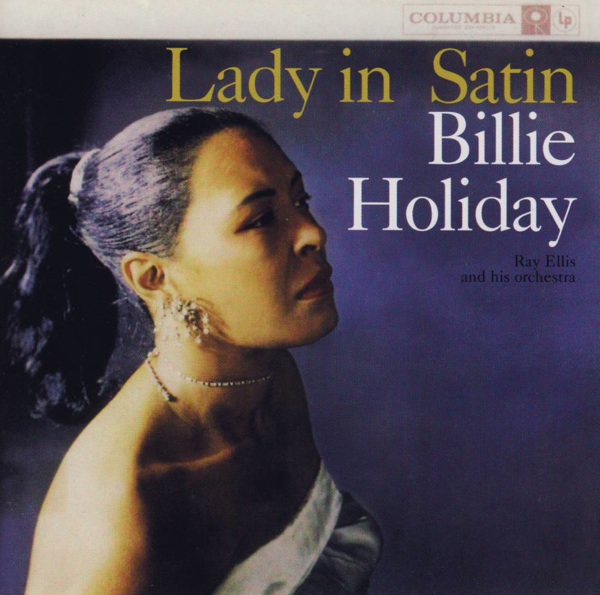
4. Lady in Satin, Billie Holiday.


The most controversial album by America's greatest singer, Lady in Satin has long divided its audiences & critics—& for obvious reasons.  Holiday was far past her prime by the time she made these records & it shows in every gravely twist of every nuanced word. But Holiday's chief innovation to popular music was to bring the emotion of the song to the forefront, not simply singing the song but performing it, akin to how an actor might read their lines. Songs like "I'm a Fool for You," "You've Changed," & "I'll Be Around" aren't just heard but felt—often devastating torch ballads handpicked by Lady Day herself. Everyone from Frank Sinatra & Elvis on down has been influenced by her in one way or another, & this, her final masterwork, plays just like it sounds: A world-weary master standing at the end of a long road. It is also, not coincidentally, the work that she felt was the finest of her career.


5. Songs for Swingin' Lovers!, Frank Sinatra.

There are two sides of America, & Sinatra caught them both—& in a row, at that. There is the late-night, failed & lonely, what-coulda-been lament that he captured in his first full-length album, In the Wee Small Hours, & there is the bright-&-shiny exuberance of his follow-up, Songs for Swinging Lovers! From the opening "You Make Me Feel So Young" through timeless classics like Gershwin's "Love Is Here to Stay" & Porter's "I've Got You Under My Skin," 
the music is as joyful as In the Wee Small Hours was stark. Sinatra's vocals—bold, blunt, offhanded, cocky, charming—were at the height of their power & conductor Nelson Riddle gave him perhaps the finest canvas he would ever grace in his long career. For it is Sinatra's voice that drives the album, a seemingly effortless extension of his personality & style. I mean, no matter who they are, everybody likes at least one Sinatra song. It would be almost un-American not to.


6. Highway 61 Revisited, Bob Dylan.

From the gunshot drum-hit opening "Like a Rolling Stone" through the surreal, winding finale of "Desolation Row," this is easily the most influential American album of the rock & roll era, & arguably the finest (really only Pet Sounds could challenge it). It was Dylan's first fully-electric album, released around the time he was plugging in at the Newport Folk Festival, & it captured the thrill & fury of his music—an endlessly fascinating sprawl of abstract poetry set to shambling garage rock that few would ever top, including Dylan himself. "Like a Rolling Stone" has since been voted the Greatest Rock & Roll Song of All-Time by Rolling Stone (natch!), but that's just the tip of the iceberg, as even ballads like "It Takes a Lot To Laugh, It Takes a Train to Cry" & "Ballad of a Thin Man" show that Dylan could be just as terminal even when things were slowed down. So, how does it feel? Pretty damn epic.


7. Never No Lament: The Blanton-Webster Band, Duke Ellington.

If Louis Armstrong was jazz music's heart—all spirit & joy—Duke Ellington was its mind—measured, considered, accomplished. Like Bloom's reckoning of Dante & Shakespeare, Armstrong & Ellington divide the jazz world, & between them, there is no third. These are the finest fruit of jazz's finest composer. They cover what is generally considered the finest period of Ellington's ever-fluctuating big band, named for bassist Jimmy Blanton & tenor saxophonist Ben Webster, in the period in which they overlapped between 1940-1942. It is, then, big band music perfected, with "Jack the Bear," "Ko Ko," "Cotton Tail," & Ellington's signature "Take the A Train." Like Armstrong's Hot Fives & Sevens, all are classics in their own right, & all refuse to be anything other than timeless.


8. Thriller, Michael Jackson.

It used to be that rock was rock & pop was pop.  Not so after Michael Jackson came along.  Arriving just as rock & roll's central narrative was splintering at the seams, spinning into classic R&B, dance-floor funk, rap recitations, heavy metal guitars, & a thousand more subcategories of subcategories, Jackson did something unimaginable: He brought them all together in one place, Thriller, which still stands as the greatest-selling album of all-time.  The songs of Thriller have become so ubiquitous that it's hard to hear how great (& innovative) they truly are—the cool funk of "Billie Jean," the street-smarts of "Beat It," the B-movie extravaganza of the title track.  There is not a dull moment in the pack, & to be sure, it became the template for countless other performers, with varying levels of success.  But Thriller stands above them all.


9. Precious Lord: Recordings of the Great Gospel Songs of Thomas A. Dorsey, Various Artists.

Thomas A. Dorsey began his career as blues singer Georgia Tom, scoring a major hit in 1928 with the innuendo-filled "Tight Like That." Four years later, upon learning of the death of his wife & unborn child, & wrote "Precious Lord, Take My Hand." In true gospel style, he was a man reborn, & in time would become "the father of black gospel music." Fast-forward some 40 years & you have this album, a two-LP set in which Dorsey leads a band playing his signature hits with the cream of the gospel singing crop bringing them to life. There's rocking gospel (Alex Bradford's "It's a Highway to Heaven"), tight vocal groups (the Dixie Hummingbirds' "Hide Me in Thy Bosom"), & slow, meditative spirituals (Marion Williams on the title track). It's arguably America's finest gospel album—a standing further cemented by its presence in the Library of Congress's inaugural class of the National Recording Registry.


10. King of the Delta Blues Singers, Robert Johnson.


Did Robert Johnson actually sell his soul to the Devil in exchange for his amazing blues musicianship?  We'll probably never know, but that doesn't matter—American myth has always proven greater than American truth, probably because it's always bigger. For, when you listen to mini-epics ("songs" feels like too tame of a word) like "Cross Road Blues," "Ramblin' on My Mind," "Stones in My Passway," & "Hell Hound on My Trail," it sure as hell sounds like a deal has been made with Satan (& bragged about in "Me & the Devil Blues"). This was music on a dark road that never ended, where any hope was sacrificed by pain, terror, & regret. Is it any wonder that everyone ever since (including Bob Dylan, the Rolling Stones, & Eric Clapton, among scores more) couldn't get enough of it?


* * *

11. Sings the Cole Porter Songbook, Ella Fitzgerald. In terms of range, pitch, & elocution, Ella Fitzgerald was probably the finest singer America has ever produced. & in terms of a songwriter working independently (as opposed to a music/lyricist pair), Cole Porter was probably the finest songwriter America ever produced. Put them together here, & with results like "Night & Day," "I Get a Kick Out of You," & "I've Got You Under My Skin," you have the American pop in its Platonic form.

12. At Folsom Prison, Johnny Cash. If America could talk, it might have a voice like Johnny Cash's. Loud, forceful, & fearless, yet also able to spin a joke & tall-tale. When Cash recorded this, he met his match in the inmates of the California prison—indeed, just listen to the wild screams that follow his stone-cold "I shot a man in Reno, just to watch him die." 

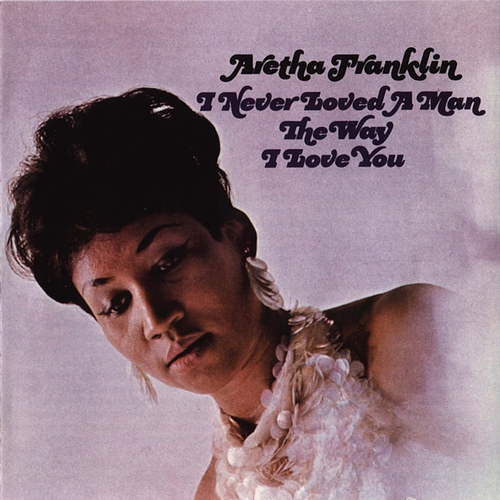
13. I Never Loved a Man the Way I Love You, Aretha Franklin. Lady Soul hit the ground running with this, her debut album for Atlantic Records. Songs like the title track & "Do Right Woman, Do Right Man," pushed the fervor of the sacred into the bedroom of the secular creating a sound. Throw in the timeless love-as-political anthem "Respect," & you have a record that is at once masterful & timeless.

14. A Love Supreme, John Coltrane. Jazz as a sermon, meticulously conceived by one of its masters. It is somehow ethereal & focused, divine & rooted, & high-concept but easily accessible. The sound of Coltrane's horn is perfectly complemented by his combo's deft touch—& the result arguably beats rock's "concept album" by a few years.

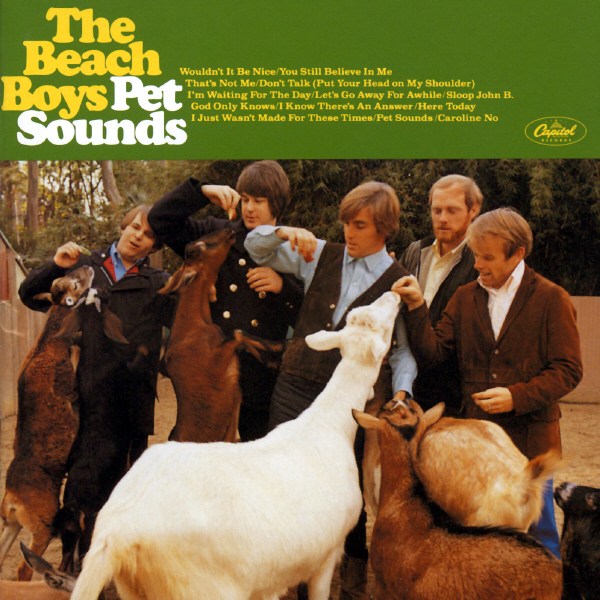
15. Pet Sounds, The Beach Boys. The finest LP by an American pop group of all-time, which perfected the rock album & inspired Sgt. Pepper, among countless other things. From the transcendent "Wouldn't It Be Nice" through the Caribbean folktale "Sloop John B." & the divine grace of "God Only Knows," few would ever top it.

16. Live at the Apollo, James Brown. Nobody would finance a live album for James Brown, so he paid for it himself. & thank God that he did. The result is the finest live album in rock, with the Godfather of Soul earning his title with every strut, grunt, & plea. The extended "Lost Someone" is rightfully praised, but I love how he suddenly breaks into "Please, Please, Please" at the drop of a hat.

17. Bing: His Legendary Years, 1941-1957, Bing Crosby. Four discs of the most influential vocalist in American history, who changed everything by plugging in a microphone & turning the belting-to-the-back-of-the-theater sound of the acoustic age into the quiet, sexy croon of the electric age. Songs like "Swinging on a Star" would make his legend, but it was his original version of "White Christmas" that remains the biggest-selling recording of all-time.


18. Live at Carnegie Hall, Judy Garland. Take one legend at her height, put her in Carnegie Hall in front of adoring fans, & record the whole thing. The result is a best-selling & Grammy Award-winning hit, which is considered by many to be the finest night of American entertainment ever captured.

19. Kind of Blue, Miles Davis. Miles Davis assembled one of the finest quintets in jazz history (including John Coltrane, Julian "Cannonball" Adderly, & Bill Evans, among others) & produced this, an uncompromised, meditative album of beautiful solitude & blissful rumination. It also just happens to be the best-selling jazz album of all-time.

20. 40 Greatest Hits, Hank Williams. In 1949, Hank Williams became the first country singer to get 6 encores at the Grand Ole Opry; four years later, he was banned from the institution & dead at 29. This set contains the father of modern country music, its finest (& wittiest) songwriter, & a haunted performer all wrapped up in one, represented by signatures like "Move It Over," "Lovesick Blues," & "Your Cheatin' Heart."

21. What's Going on, Marvin Gaye. Motown's biggest-selling album turned on, tuned in, & dropped out—then surfaced with a sermon cloaked in a concept album. At first Motown refused to release it; when they finally relented, it became their best-selling LP—eyes looking towards heaven, but soul weary as hell.

22. The Best of Muddy Waters. A crib sheet to the master of the electric blues, & some of the most influential music ever waxed. "Rollin' Stone" alone would in time lend itself to rock's finest song, most enduring band, & definitive magazine. Meanwhile, classics like "I'm Your Hoochie-Coochie Man" & "I Just Want to Make Love to You" are stone-cold standards of the modern blues.

23. Dust Bowl Ballads, Woody Guthrie. A State of the Union, c. 1935, as told by a folk-poet chronicling the apocalypse. This was singer-songwriter music in its rawest (& finest) form, with all of the grit & grime of the Oklahoma plains. "The Great Dust Storm" best told the tale, but it's "I Ain't Got No Home" & Dusty Old Dust" that have become the classics. It was an album with sullen faces here, gallows humor there, & dust everywhere else.

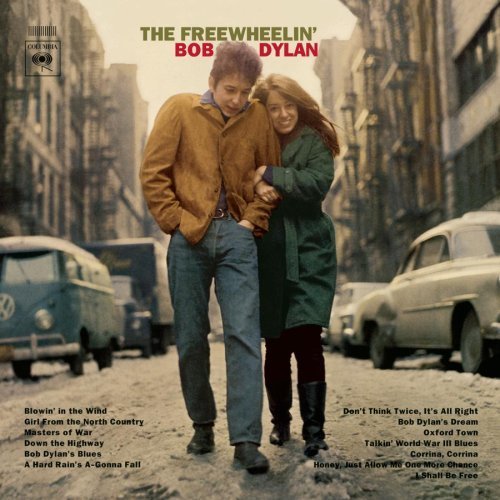
24. The Freewheelin' Bob Dylan. The portrait of the artist as a young folksinger, which all but doubles as a greatest hits of Dylan's early period. On his first album comprised (almost entirely) of original material, he would make his legend on "Don't Think Twice, It's Alright," "A Hard Rain's A-Gonna Fall," "Masters of War," & the Civil Rights anthem "Blowin' in the Wind," which he claims to have written in 10 minutes.

25. Born to Run, Bruce Springsteen. With the swagger of Elvis, the imagery of Dylan, & the dense soundscapes modeled on Phil Spector (plus a tip of the hat to Roy Orbison), rock & roll's prodigal son gets one last chance to make it real—& on tunes like "Thunder Road" & the title track—gets it.

* * *

26. The Complete Savoy & Dial Master Takes, Charlie Parker. Jazz broken apart & reassembled as bop, by the man who would define the sound; the future starts here.

27. Lady Day: The Master Takes & Singles, Billie Holiday. Hear Holiday go full blossom from a featured performer to a vocal legend, like the gardenia that adorned her hair.


28. Are You Experienced, Jimi Hendrix. Rock's finest debut & guitar's greatest genius takes acid (& music) as far as it can go in 1967.

29. Oklahoma!, Original Cast Recording.
The first modern musical soundtrack—& as some like to tell it, the finest ever.

30. It Takes a Nation of Millions To Hold Us Back, Public Enemy. Rap music's Sgt. Pepper is never badder than bad cuz a brother is madder than mad at the fact it's corrupt like a senator...

31. Time Out!, Dave Brubeck. A rare time when the popular audience was ahead of the critics, recognizing the exploration of odd time signatures in clever songs that never tire.

32. Where Did You Sleep Last Night?, Lead Belly. With the title track, grunge-tested & folklorist-approved—& for my money, the finest history of rock & roll you will ever hear.

33. Mingus Ah Um, Charles Mingus.
A survey of African American music as led by jazz's most visionary bassist.

34. The Early Years, Bert Williams. The most famous American you've never heard of—an African American blackface performer who helped invent pop music (while perfecting deadpan humor).

35. Elvis' Golden Hits, Elvis Presley. "Hound Dog," "Heartbreak Hotel," "Don't Be Cruel," & all the rest of his peak, just before the Army came & stole his crown.

36. West Side Story, Original Soundtrack Recording. Romeo & Juliet recast as a pop opera in New York City's Puerto Rican & American gangs singing—yet somehow it all works.

37. The Essential Jimmie Rodgers.
"The Singing Brakeman" founds country music as we know it with a wink & a strum—& that signature high yodel.

38. Live at Carnegie Hall, Benny Goodman. Jazz goes uptown in the music's coming-out party, led by its greatest white innovator.

39. The Great Twenty-Eight, Chuck Berry. With "Maybellene," "Roll Over Beethoven," & "Johnny B. Goode"—the finest telling of the American Dream I've ever heard.

40. Nevermind, Nirvana.
Punk breaks, thanks to a Seattle trio led by a loser who used to live under a bridge & a little ditty called "Smells Like Teen Spirit."

41. Will the Circle Be Unbroken, The Nitty Gritty Dirt Band. A history of country music as told by some of its masters—& the kids they inspired—in a triple-LP set that lives up to its title.

42. Like a Prayer, Madonna. Is there a dancefloor in the church or a church in the dancefloor? Either way, the answer is the Queen of Pop's masterpiece.

43. Live at Regal, B.B. King.
Electric blues finest album, led off by "Every Day I Have the Blues," but crescendoing with "How Blue Can You Get?"

44. Red-Headed Stranger, Willie Nelson. A quiet song-cycle about a murderous preacher that all but solidified the '70s "outlaw" country sound.

45. Porgy & Bess, Original Cast Recording. Two New York Jews dream of life in the South, where the livin' is easy...

46. The Ramones. 1-2-3-4! As in: 1 sound, 2 minutes, 3 chords, 4 sick bubblegum singers posing as brothers—& inventing punk.

47. Star Wars Soundtrack, John Williams. Voted the finest film soundtrack of all-time by the American Film Institute, & who's to argue with them? The LP that launched a thousand ringtones.

48. In the Wee Small Hours, Frank Sinatra.
The Voice's other side—melancholy, looking into an empty glass, & crooning "One for My Baby (& One for The Road)."

49. Cajun Dance Party: Fais Do-Do, Various Artists. Included for Amede Adroin's 6 Columbia songs (canjun's earliest commercial recordings), buttressed by other early masters.

50. Let Me Sing & I'm Happy, Al Jolson. America's most popular singer of the first half the 20th Century shows off his charisma in these tunes taken from his earliest talkies.